

The Real Downsides of Sculptra. And Why the Right Provider Changes Everything

Katrina Friedberg, MSN, APRN, FNP-BC

TLDR: Too Long, Didn’t Read

Here’s the honest 60-second version:


  • Sculptra is irreversible: unlike HA fillers, it cannot be dissolved once injected
  • Lumps and nodules are a real risk, but almost always tied to provider technique, not the product itself
  • Results are gradual: expect 3–6 months before you see the full picture
  • It’s not right for everyone: pregnancy, keloid history, and certain autoimmune conditions are contraindications
  • The upfront cost is significant: vials are typically $700–$800 each with a two-vial minimum, putting most treatment plans at $1,500 and up, though Sculptra typically outlasts traditional fillers on a cost-per-year basis
  • The majority of bad outcomes trace back to under-trained providers, not the treatment itself


Want the full picture? Keep reading. It’s worth it.


Sculptra treatment consultation

I’m going to be honest with you, because that’s the only way I know how to practice.


If you’ve spent any time researching Sculptra treatment, you’ve already found the stories. Lumps that didn’t resolve. Faces that looked “off.” Clients who felt blindsided by what nobody told them before they committed. I’ve read every one of those stories, and I don’t think the answer is to dismiss them or bury them in marketing language.


The answer is to give you the full, honest picture. Every downside. Every caveat. Every thing I tell my own clients before we start. That’s what this article is, and by the end of it, you’ll know exactly what to ask at any consultation.

First: What Makes Sculptra Different From Other Fillers?

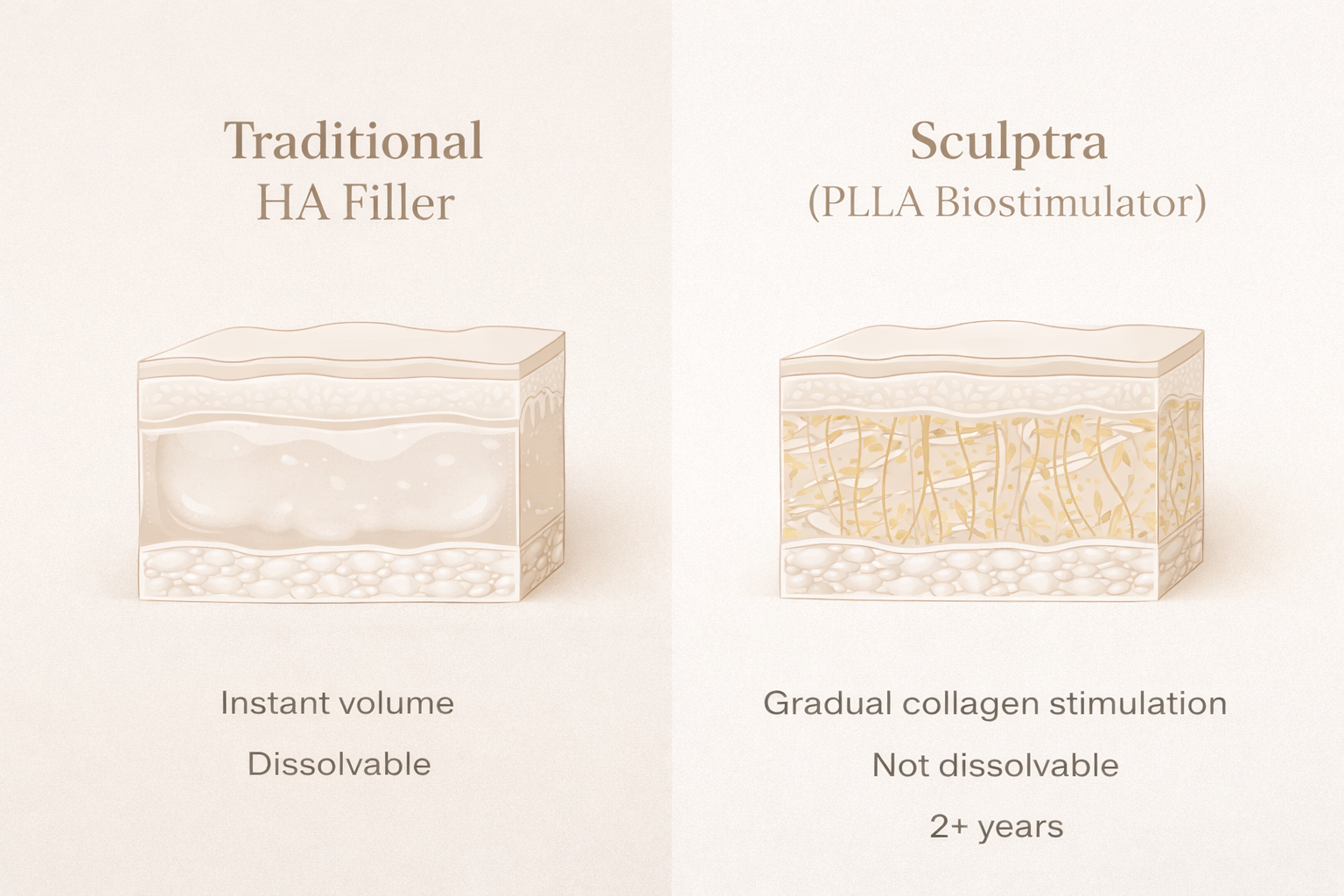
Sculptra is not a traditional dermal filler. It’s a biostimulator, an FDA-approved injectable made from poly-L-lactic acid (PLLA) that works by triggering your own body to produce new collagen over time, rather than simply adding instant volume. That distinction is at the root of both its biggest strengths and its most important limitations.

sculptra treatment vs. traditional HA filler treatment

The Real Downsides of Sculptra: An Honest Breakdown

Sculptra Is Irreversible. Unlike Traditional Fillers

This is the most important thing I tell every client before we go any further.


Hyaluronic acid fillers like Juvéderm or Restylane can be dissolved with an enzyme if you don’t love the outcome. Sculptra cannot. Because it works by stimulating your own collagen production, there’s no way to reverse it. The collagen that grows is yours, it lives in your face, and it’s there for the long haul.


For the right person, that’s actually the point: long-lasting, natural volume with no constant maintenance. But it means we have to be thoughtful and conservative from session one. You don’t get a do-over on collagen you can’t remove.


At iGlo:   We will not move forward with any client who isn’t completely clear on this. It’s a non-negotiable part of our consultation.

The Risk of Lumps and Nodules Is Real. But the Numbers Tell a Nuanced Story

Nodules (small lumps under the skin) are the most talked-about Sculptra risk, and I won’t pretend they can’t happen.


The FDA’s clinical documentation reports a nodule incidence rate of 28.4% across all treated facial areas. That sounds alarming until you understand the fine print: the FDA’s definition was intentionally broad, capturing any irregularity a physician could detect by pressing firmly on the skin, including ones the patient never saw, felt, or was bothered by. Real-world estimates from board-certified injectors put the rate of visible, symptomatic lumps at well under 2%.

What Actually Causes Sculptra Nodules?

Almost always, the cause is technique not the product itself. The most common culprits are:


  • Injecting too superficially (too close to the skin’s surface)
  • Incorrect dilution of the product
  • Skipping or under-doing the post-treatment massage protocol
  • Over-injecting in a single session


These are provider errors. That distinction matters enormously when you’re deciding where to go.


At iGlo: We follow strict dilution protocols, inject at the correct depth every time, and walk every client through detailed massage instructions before they leave. Follow-up appointments are standard, not an afterthought.


Sculptra Results Are Gradual. There Is No Instant Gratification

After age 20, we lose roughly 1% of our collagen every single year. Sculptra works by rebuilding that foundation from within — and that biological process takes time.


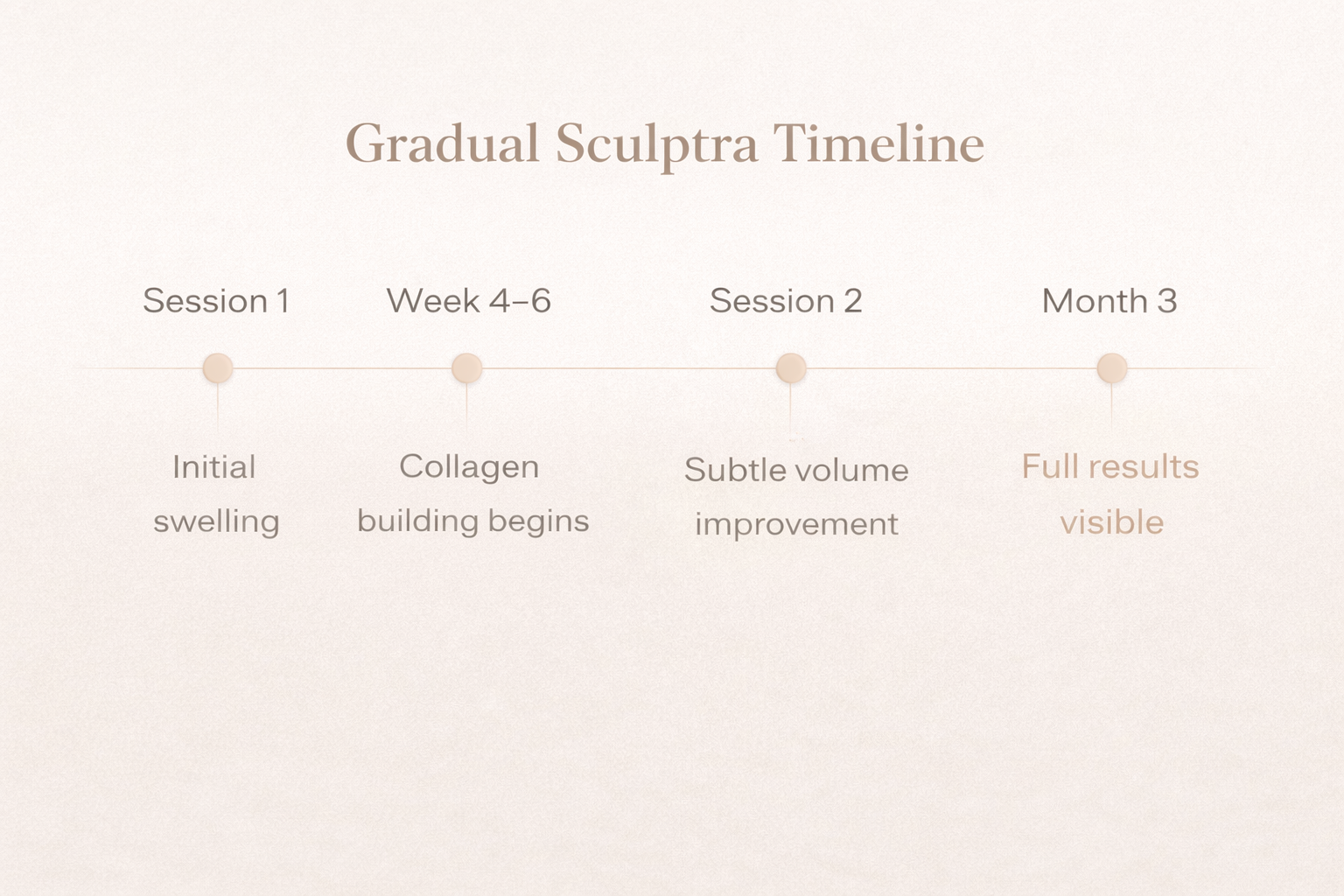
Most clients complete 2–3 sessions spaced 4–6 weeks apart. You’ll start noticing subtle changes around weeks 4–6, with full results visible at the 3–6 month mark after your final session. In between, you’ll go through a window where the initial swelling resolves and you temporarily look close to baseline. I always tell clients about this phase upfront so it doesn’t catch them off guard.


If you need visible results before an event in two weeks, Sculptra is not your treatment. If you want people to eventually say “you look amazing, have you been sleeping better?” this is exactly your treatment.

timeline of the results of Sculptra treatment

Sculptra Is Not the Right Fit for Every Candidate

Per FDA prescribing guidelines, Sculptra should not be used in people who are pregnant or breastfeeding, or those with a history of keloid formation or hypertrophic scarring. Beyond that, clients with certain autoimmune conditions require careful evaluation, research suggests a connection between autoimmune history and a higher risk of granuloma formation after Sculptra.


It’s also not ideal for clients who are planning facelift surgery in the near future. Sculptra’s collagen stimulation in the deeper tissue layers can add complexity to future surgical planes, a detail worth discussing with both your injector and your surgeon before you start a treatment series.


At iGlo:   If you’re not the right candidate for Sculptra, I’ll tell you that at your consultation. I’d rather have an honest conversation about alternatives than put anyone in a situation they’re not suited for.

The Investment Is Significant and Should Be Planned for Upfront

Sculptra is priced per vial, typically in the $700–$800 range, with a two-vial minimum per session. Most clients start their treatment plan at around $1,500 and may invest more depending on how many vials their individual anatomy requires across their full series. That’s a real number, and I’d always rather you hear it from me before your appointment than be surprised.


Here’s the perspective shift: HA fillers typically require retreatment every 6–12 months. Sculptra’s results last up to 2+ years according to Galderma’s clinical data. Calculated over time, Sculptra often becomes the smarter long-term investment, but only if the upfront cost works for you right now.

Sculptra Can Complicate Future Facelift Surgery

Some plastic surgeons approach Sculptra with caution specifically because of this, and it deserves a straight answer.


Because Sculptra stimulates collagen in the deeper tissue layers, it can create denser planes that are more challenging to navigate during a deep-plane facelift. Most surgeons agree a skilled facelift surgeon can work around it, and the added complexity is generally low. But if surgical rejuvenation is part of your long-term plan, this is a conversation to have before you start, not after.

Where Most Sculptra Problems Actually Come From

The overwhelming majority of bad Sculptra outcomes trace back to one root cause: the wrong provider.


Sculptra is not a treatment you hand to someone who injects it twice a month between other appointments. It requires precise dilution, correct injection depth, a conservative first-session approach, and thorough client education on the gradual timeline and aftercare protocol. When those things are done right, the clinical data is genuinely impressive.


A 2024 randomized controlled trial of 260 participants published in the Journal of Drugs in Dermatology reported over 90% patient satisfaction at 52 weeks. A 2025 multicenter study showed 90.57% improvement in midfacial volume at 12 months. And Galderma’s own trial data shows 95% of patients reported improved skin radiance two full years after treatment.


Sculptra works. It works beautifully. But it works best (and really only works safely) in experienced, precise, conservative hands.

Is Sculptra Right for You?

Sculptra Tends to Be a Strong Fit If You:

  • Are experiencing gradual volume loss, hollowing in the temples or cheeks, or early structural decline in the midface and jawline
  • Want to look naturally refreshed — not filled, not changed, just better
  • Are ready for a longer-lasting result and want to step off the every-six-months filler treadmill
  • Understand and accept the gradual results timeline
  • Are committed to following post-treatment massage and aftercare instructions
  • Are not planning a surgical facelift in the near future

Sculptra Is Likely Not the Right Fit If You:

  • Want to see visible results immediately after your appointment
  • Are pregnant, breastfeeding, or have a history of keloid formation
  • Have an active autoimmune condition (requires careful one-on-one evaluation)
  • Are planning facelift surgery soon and haven’t discussed timing with your surgical team
  • Are not prepared to follow through with the post-treatment massage protocol
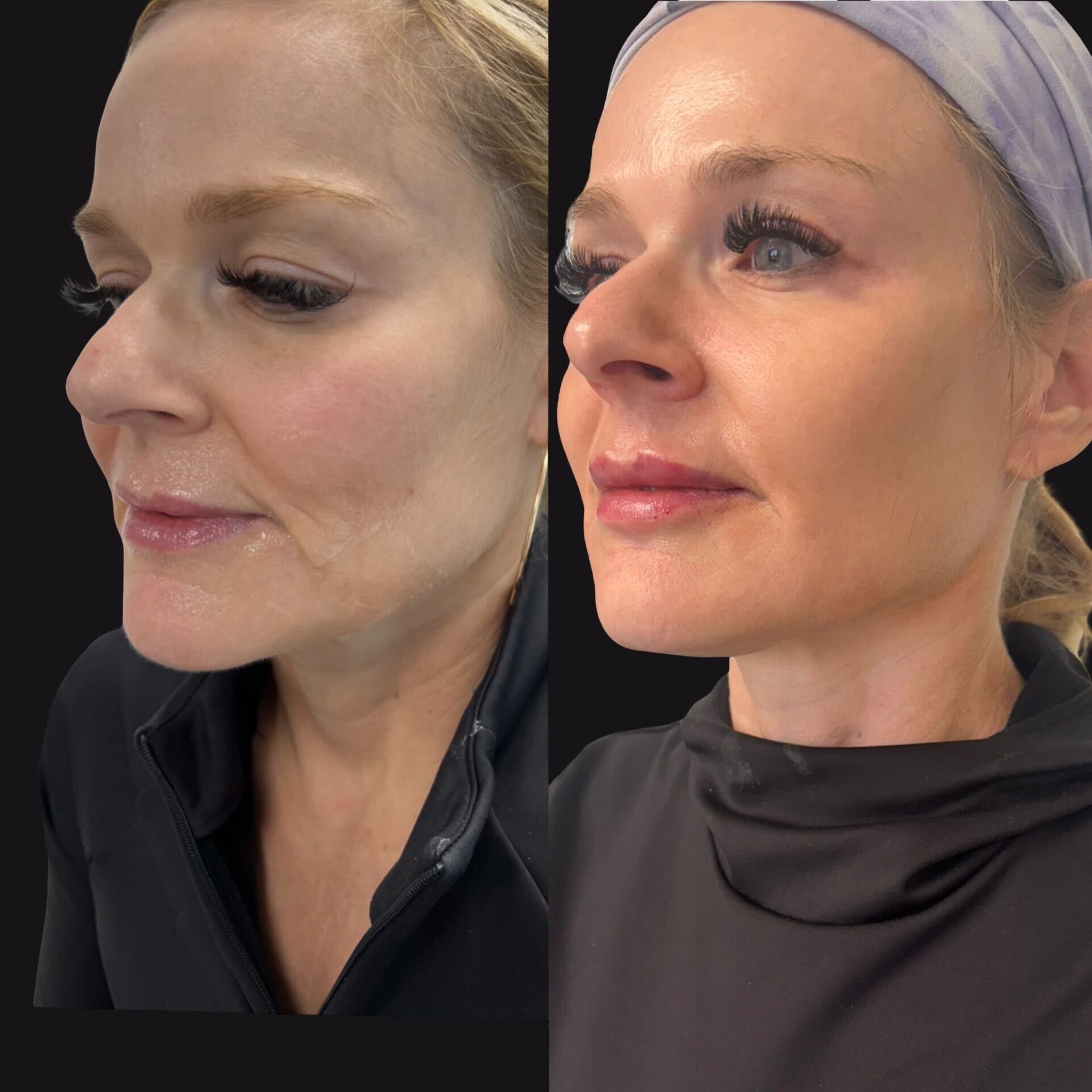
sculptra treatment before and after results

The Bottom Line

Sculptra has real downsides. It’s irreversible. It requires patience. The lump risk, while manageable, exists. It’s not for everyone. And it is absolutely not a treatment to trust to an under-trained or overeager injector.


But for the right person, with the right provider? It’s one of the most impressive non-surgical tools we have. The ability to look genuinely, naturally like yourself, just healthier, more rested, more like the version of your face you remember, is something most traditional fillers simply can’t replicate with the same longevity.


At iGlo Aesthetics & Wellness in Miami Lakes, we believe the best Sculptra result is one nobody can quite put their finger on, they just know you look great.

Ready to get your honest Sculptra consultation?

I’d love to sit down with you, look at your face, answer every question you have, and give you a straight answer about whether Sculptra is the right fit for your goals. If it’s not, I’ll tell you that too and we’ll figure out what is.

 iGlo Aesthetics & Wellness  |  Miami Lakes, FL

Frequently Asked Questions About Sculptra

These are the questions our clients ask most often and that people across Miami are searching for right now. If your question isn’t answered here, ask us directly at your consultation.

  • Can Sculptra lumps or nodules be treated if they develop?

    Yes. If nodules do develop, there are several treatment options available depending on their size and nature. Mild cases often respond to deep massage. More persistent nodules may be treated with intralesional corticosteroid injections or, in rare cases, a combination of other interventions. The key is catching them early, which is one of the reasons we schedule follow-up appointments as a standard part of every Sculptra treatment plan at iGlo. For more detail, the National Library of Medicine has published case reports on nodule management for further reading.

  • Is Sculptra FDA approved?

    Yes. Sculptra received its first FDA approval in 2004 for the treatment of facial lipoatrophy in HIV patients, and was approved for cosmetic use in 2009. Most recently, the FDA expanded Sculptra’s approved indications to include correction of cheek wrinkles and improvement of overall skin quality, confirming what injectors have observed clinically for years.

  • How long does Sculptra actually last?

    According to Galderma’s clinical data, Sculptra results can last up to 2 years or longer, significantly outlasting traditional HA fillers, which typically require retreatment every 6–12 months. That longevity is one of the primary reasons clients choose Sculptra over conventional fillers for long-term facial rejuvenation.

  • How is Sculptra different from Radiesse?

    Both Sculptra and Radiesse are biostimulators, meaning they work by stimulating your body’s own collagen production rather than simply adding volume. The key difference is in their active ingredients and how they behave. Sculptra uses poly-L-lactic acid (PLLA) and works very gradually, with results developing over several months. Radiesse uses calcium hydroxylapatite (CaHA) and provides more immediate structural lift while also stimulating collagen. A 2024 gene expression study presented at ASDS found that Sculptra stimulated more components of the extracellular matrix — including both collagen and elastin — while producing less inflammation than the comparator biostimulator. Which is right for you depends on your goals, your anatomy, and your timeline, which is exactly what we assess at your consultation.

  • What should I look for when choosing a Sculptra provider in Miami?

    Experience with Sculptra specifically matters more than general injectable experience. Look for a provider who: has performed Sculptra regularly (not occasionally), can walk you through their dilution protocol and injection depth approach, gives you a realistic timeline rather than promising instant results, and schedules follow-up appointments as a standard part of treatment, not an add-on. Sculptra’s results are deeply tied to the skill and conservatism of the injector. The Cleveland Clinic summarizes it well: Sculptra has unique injection requirements and should only be used by a trained healthcare practitioner.

  • Can I combine Sculptra with Botox or other treatments?

    Yes, and this is actually one of Sculptra’s great advantages, it pairs well with a number of other treatments. At iGlo Aesthetics & Wellness, we frequently combine Sculptra with neuromodulators like Botox or Daxxify for a comprehensive approach: Sculptra rebuilds structural volume while Botox addresses dynamic movement lines. Sculptra also pairs beautifully with microneedling, skin tightening treatments, and medical-grade skincare protocols. The combination approach is something we map out together during your consultation based on your individual goals.

Author bio:

Katrina Friedberg, MSN, APRN, FNP-BC is a board-certified Family Nurse Practitioner and lead injector at iGlo Aesthetics & Wellness in Miami Lakes.

Katrina Friedberg, lead injector at iGlo Aesthetics & Wellness in Miami Lakes

Recent Posts

A vibrant, confident woman in her 40s enjoying a luxury outdoor poolside setting in Miami Lakes
by Katrina Friedberg, MSN, APRN, FNP-BC 3 March 2026
Learn hormone therapy costs in Miami Lakes, including BHRT and testosterone therapy. Discover benefits, risks, and personalized treatment options.
bottle of Skinbetter Science AlphaRet Overnight Cream and Alastin Skincare Regenerating Skin Nectar
by Katrina Friedberg, MSN, APRN, FNP-BC 18 February 2026
Confused by Skinbetter vs. Alastin? We compare these top medical-grade brands to help you choose the right regimen for your skin goals.
concierge primary care consultation in miami
by Katrina Friedberg, MSN, APRN, FNP-BC 18 February 2026
Learn the difference between concierge primary care and traditional primary care. Discover how membership-based healthcare in Miami Lakes offers personalized, proactive medical support.