Halo Laser Downtime: What to Expect Each Day of Your Recovery
TL;DR: Halo laser recovery takes approximately seven to eight days of social downtime. The skin moves through redness, bronzing, and peeling before revealing noticeably improved texture and tone.

If you've just booked your Halo laser treatment at iGlo in Miami Lakes, or you're close to committing, the most common question isn't about results. It's about the week in between. Knowing exactly what your skin will look like on day three or day five makes the recovery far easier to manage, and far less alarming when it happens.
What Does Halo Laser Recovery Look Like Day by Day?
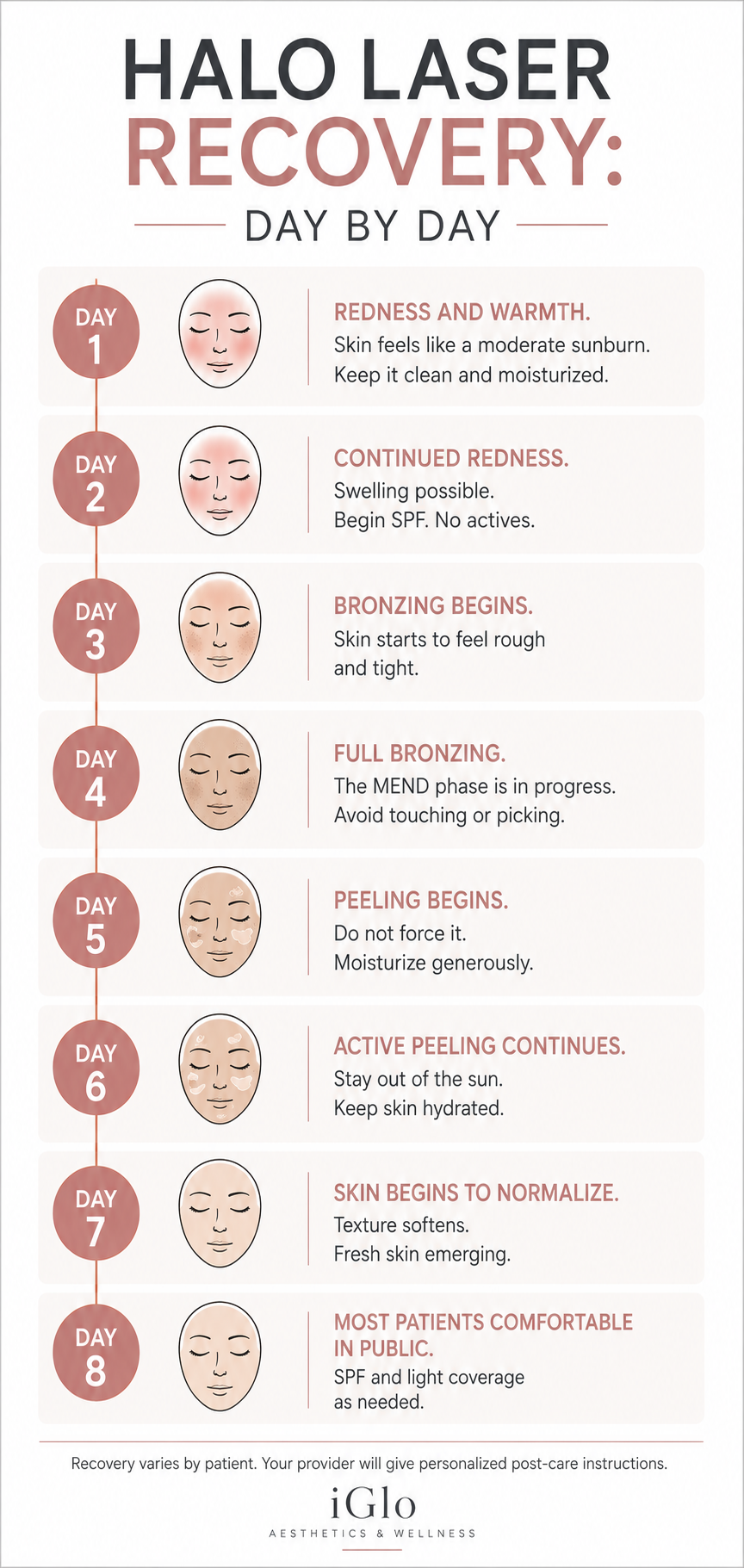
Days one and two bring redness and warmth, similar to a moderate sunburn. Days three and four, the skin begins to bronze and feel rough as treated cells rise to the surface. Days five and six, peeling begins and you should leave it alone. By days seven and eight, skin normalizes and most patients are comfortable in public with SPF and light coverage.
That progression is predictable. It is also a sign the treatment is working.
The MEND Phase: What Is Actually Happening Under the Surface
Sciton calls the post-Halo healing window the MEND phase. During this time, the laser's dual wavelengths have created thousands of micro-channels in the skin. Your body responds by cycling dead and damaged cells upward while triggering collagen remodeling in the deeper layers. The bronzing you see on days three and four is a visible layer of those treated cells preparing to shed. It looks like the skin is misbehaving. It is actually doing exactly what was asked of it.
What to Avoid During Each Stage of Recovery
During the first two days, avoid sun exposure entirely and keep skincare simple: gentle cleanser, a thick fragrance-free moisturizer, and nothing else. From day two onward, SPF goes on every morning without exception. Until your provider clears you, stop all active ingredients, including retinol, AHAs, BHAs, and vitamin C. Do not pick or force peeling at any stage. Forcing it pulls skin that isn't ready and can leave marks that take far longer to resolve than the peel itself would have.
Why Is My Skin Still Red Four Days After Halo?
Redness at day four is a normal and expected part of the Halo recovery cycle. The skin is actively cycling dead cells to the surface, and the inflammatory response is part of the remodeling process.
Most patients see the redness peak around days two and three and gradually soften from day four onward. If redness worsens significantly or is accompanied by increasing swelling and warmth after day five, that warrants a call to your provider. Persistent or worsening symptoms are not typical and should be evaluated.

How to Care for Your Skin During Halo Recovery
Keep the skin moisturized, avoid all active skincare ingredients until cleared by your provider, apply SPF religiously from day two onward, and do not pick or force peeling. Hydration and sun avoidance are the two most impactful things a patient can do during this window.
A simple recovery routine for most iGlo patients looks like this: a gentle non-foaming cleanser morning and night, a barrier-supportive moisturizer applied generously, and a mineral SPF 30 or higher every morning starting day two. That's it. The less you do, the better your skin heals.
Quick Questions
How many days of downtime does Halo laser require? Most patients plan for seven to eight days of social downtime. The visible recovery process, including redness, bronzing, and peeling, typically resolves by day seven to eight, after which most patients are comfortable in public with SPF and light coverage.
Can I go to work after Halo laser? Patients working from home or in non-public-facing roles often return within two to three days. Those with in-person, client-facing roles typically plan for a full week. Remote work during recovery is manageable with proper skincare and realistic expectations around bronzing and early peeling.
"I tell every Halo patient the same thing on day three when they call me: if it looks bad, it's working. The bronzing and peeling are your skin doing exactly what we asked it to do."
— Katrina Friedberg, MSN, APRN, FNP-BC
Ready to Plan Your Halo Treatment?
Knowing the recovery timeline is the first step. For a full breakdown of what Halo laser treats, who makes a good candidate, and what results typically look like, read the complete Halo laser guide for Miami Lakes patients.
When you're ready to move forward,
Halo laser treatment at iGlo is performed by Katrina Friedberg, MSN, APRN, FNP-BC, a Sciton-trained provider with 10+ years of experience. Serving Miami Lakes, Doral, Hialeah, and the surrounding areas.