Hormone Therapy for Women in Miami: How to Know If You're a Candidate and What Treatment Actually Involves
TL;DR
- Hormone therapy for women in Miami addresses the root causes of fatigue, brain fog, weight gain, sleep disruption, and reduced libido that appear during perimenopause and menopause.
- At iGlo Aesthetics & Wellness in Miami Lakes, hormone protocols are developed by Katrina Friedberg, MSN, APRN, FNP-BC, based on comprehensive lab panels and individual symptom profiles, not a one-size formula.
- The process starts with a full hormone panel, not a single lab value, because no single number tells the complete clinical picture.
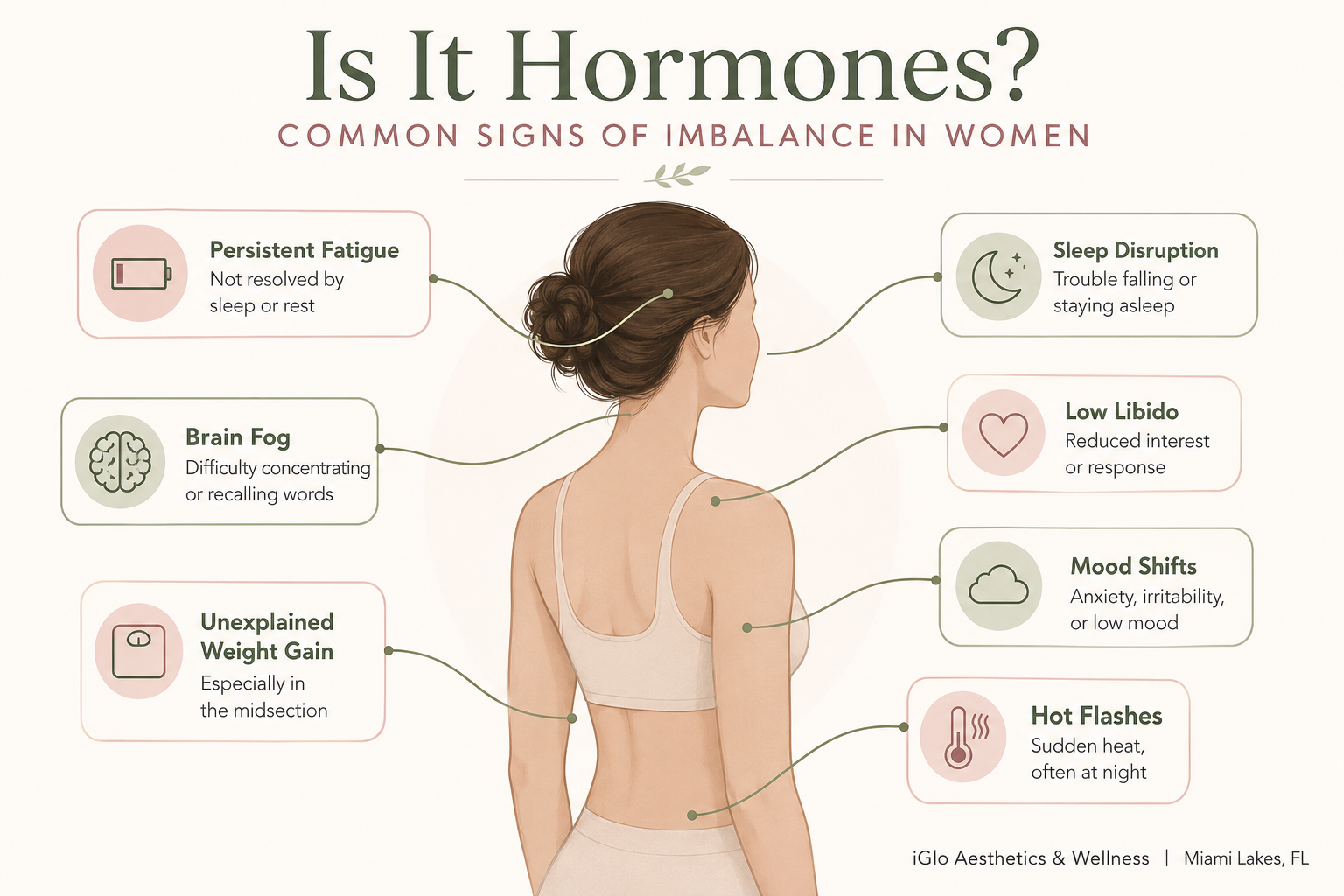
If you are in your 40s and feel like your body shifted without warning, you are not imagining it. Women in Miami Lakes, Doral, and across South Florida are sitting in appointments with primary care doctors, being told their labs are "normal," and going home with the same symptoms they walked in with. Persistent fatigue that sleep does not fix. Weight collecting in the midsection despite no real change in diet. A brain that feels slower than it used to. These are not character flaws or signs of aging you simply have to accept. They are frequently the signs of a hormone imbalance, and they respond well to targeted, supervised treatment. This article explains how to recognize the pattern, how testing actually works, what your options are, and what the process looks like at iGlo.
What Symptoms Indicate a Hormone Imbalance in Women?
The most common symptoms of hormone imbalance include persistent fatigue, unexplained weight gain (especially in the midsection), brain fog, disrupted sleep, low libido, mood changes, and hot flashes. These symptoms frequently appear years before a formal menopause diagnosis, during the perimenopausal window, and are often dismissed as stress, depression, or simply the cost of getting older.
That dismissal has real consequences. When hormonal symptoms go unaddressed, the downstream effects accumulate: metabolic changes, declining bone density, accelerating skin aging, and a compounding fatigue that makes everything else harder to manage. Recognizing the pattern early is the first step toward doing something about it.
Perimenopause vs. Menopause: Identifying Where You Are
Perimenopause can begin as early as your late 30s, though most women notice it in their early-to-mid 40s. Estrogen and progesterone levels begin fluctuating in ways they never did before. Sleep becomes unpredictable. Cycles may shorten or lengthen. Mood shifts feel disproportionate to circumstance. Menopause itself is defined as 12 consecutive months without a menstrual period. The hormonal picture at that point is more stable, but the symptoms that drove you through perimenopause do not simply resolve on their own once you cross that line.
Knowing where you are matters because the hormonal needs of a 43-year-old in early perimenopause and a 54-year-old post-menopause woman are different. A personalized treatment plan accounts for that distinction from the start.
Symptoms That Are Often Misattributed to Stress or Aging
Brain fog, low energy, and a reduced sense of motivation are among the most commonly misread symptoms in women over 40. They look like burnout. They look like anxiety. They look like the predictable wear of a full life. In many cases, they are driven by declining progesterone, suboptimal thyroid function, or cortisol dysregulation, all measurable and all treatable. The key is testing rather than assuming.
What Does Hormone Testing Look Like?
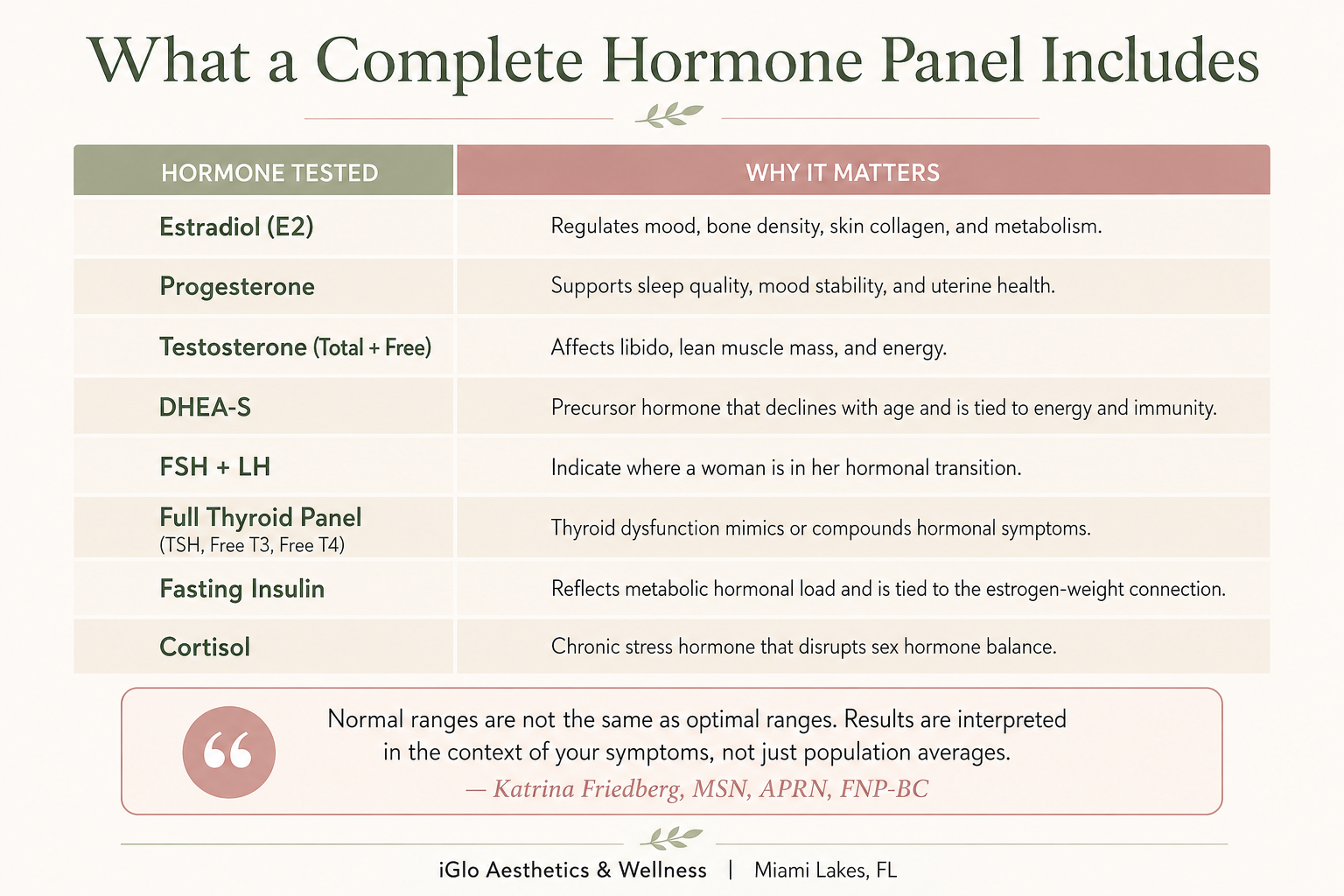
A comprehensive hormone panel includes estrogen, progesterone, testosterone, DHEA, cortisol, thyroid function, and insulin, because hormones do not operate in isolation. A single estrogen reading without context rarely tells the complete clinical story, and treating one number without understanding the full system often produces incomplete results.
What a Complete Hormone Panel Includes
A thorough panel goes well beyond the basics. At iGlo, labs are ordered to assess estradiol, progesterone, total and free testosterone, DHEA-S, FSH, LH, a full thyroid panel (TSH, Free T3, Free T4), fasting insulin, and cortisol. In patients with metabolic symptoms, additional markers may be added. This level of detail is what separates a clinical hormone assessment from a cursory screening.
How to Interpret Results and Why Optimal Ranges Differ From Normal Ranges
This is where many women encounter a frustrating gap in conventional care. A lab result can fall within the "normal" reference range and still represent a level that is suboptimal for that individual. Reference ranges are built on population averages, not on what produces symptom resolution in a given patient. Optimal hormone levels, the levels at which most women feel and function their best, are often higher than the low end of normal. Interpreting results through that lens, and comparing them against your symptom picture, is what drives a treatment plan that actually works.
What Are the Options for Hormone Therapy in Miami?
Options include bioidentical hormone replacement in cream, pellet, or oral form, as well as targeted supplementation for patients with subclinical imbalance. The right delivery method depends on the hormone being replaced, the patient's lifestyle, and how consistently they will adhere to the protocol.
Hormone therapy for women in Miami Lakes is not a single treatment. It is a category of personalized interventions matched to the individual's lab results and goals.
Bioidentical Hormone Pellets: What to Expect
Pellet therapy involves the insertion of a small, custom-compounded pellet beneath the skin of the upper buttock. The pellet releases a consistent, physiologic dose of hormones over three to six months. Because the delivery is continuous rather than daily or weekly, blood levels remain stable. Most patients find this format convenient and prefer the consistency it offers over creams or pills that require daily attention. Insertion itself takes only a few minutes and is done under local anesthesia.
Cream and Oral Options for Women Who Prefer Flexibility
For women who are not ready for pellets, or whose hormonal needs are more targeted, topical creams and oral or sublingual preparations offer flexibility. Creams applied to the inner wrist or forearm allow for easy dose adjustments. Oral options, including some bioidentical progesterone formulations, are particularly effective for sleep-related symptoms. The right format is the one you will actually use consistently, and that determination is made in conversation during your consultation.
Is Hormone Therapy Safe?
Modern bioidentical hormone therapy, when prescribed and monitored by a licensed clinician, has a favorable safety profile for most women. The risks that were widely publicized in earlier decades were associated primarily with synthetic hormone formulations used in the Women's Health Initiative study, not with bioidentical compounds, which are structurally identical to the hormones your body produces naturally. Ongoing monitoring is a non-negotiable part of any responsible protocol, regardless of the delivery method.
The Research on Bioidentical vs. Synthetic Hormones
Bioidentical hormones are chemically identical to endogenous hormones. Synthetic versions, including those used in the WHI study, have structural differences that affect how they bind to receptors and how the body metabolizes them. Current research, including work supported by the Menopause Society, supports the use of bioidentical hormone therapy for symptom management in appropriate candidates, particularly when initiated in the perimenopausal window.
Who Should Not Use Hormone Therapy
Hormone therapy is not appropriate for everyone. Women with a personal history of hormone-sensitive cancers, active cardiovascular disease, unexplained vaginal bleeding, or a history of blood clots require a careful individual assessment before any protocol is considered. At iGlo, every candidate undergoes a thorough health history review as part of the initial consultation. The goal is appropriate care, not blanket treatment.
How Does Hormone Therapy Support Weight Loss and Skin Health?
Estrogen and testosterone both play roles in metabolic rate, fat distribution, and skin collagen density. Correcting hormonal deficiency, particularly in perimenopausal women, can meaningfully improve the body's response to weight loss interventions and slow the pace of skin aging.
Women who are struggling with weight despite consistent effort often have a hormonal component that has not been addressed. If estrogen is low, fat preferentially accumulates in the abdomen. If testosterone is low, lean muscle mass declines and metabolic rate follows. Addressing those deficiencies does not automatically produce weight loss, but it removes a meaningful barrier. For patients working with iGlo on
hormonal contributors to weight gain, hormone optimization is frequently the piece that makes everything else work better.
The Hormone-Weight Connection
Estrogen regulates insulin sensitivity. When estrogen declines in perimenopause, insulin resistance often increases, and that shift makes weight management measurably harder even when caloric intake and activity levels have not changed. Testosterone supports lean muscle tissue and metabolic efficiency. When both are low, the body shifts toward fat storage and away from fat burning. Correcting those deficiencies changes the metabolic environment in which all other weight management efforts operate.
Hormonal Skin Changes and What Can Be Done
Estrogen is directly involved in collagen production. As estrogen declines, skin loses density, elasticity, and hydration faster than it otherwise would. Women in their late 40s and early 50s who are perimenopausal often notice accelerated skin changes that do not respond well to topical products alone. Hormone optimization supports skin health from within, and pairs well with in-office treatments like
Morpheus8 for patients who want to address both the hormonal and structural dimensions of skin aging.
How Do You Get Started With Hormone Therapy at iGlo in Miami Lakes?
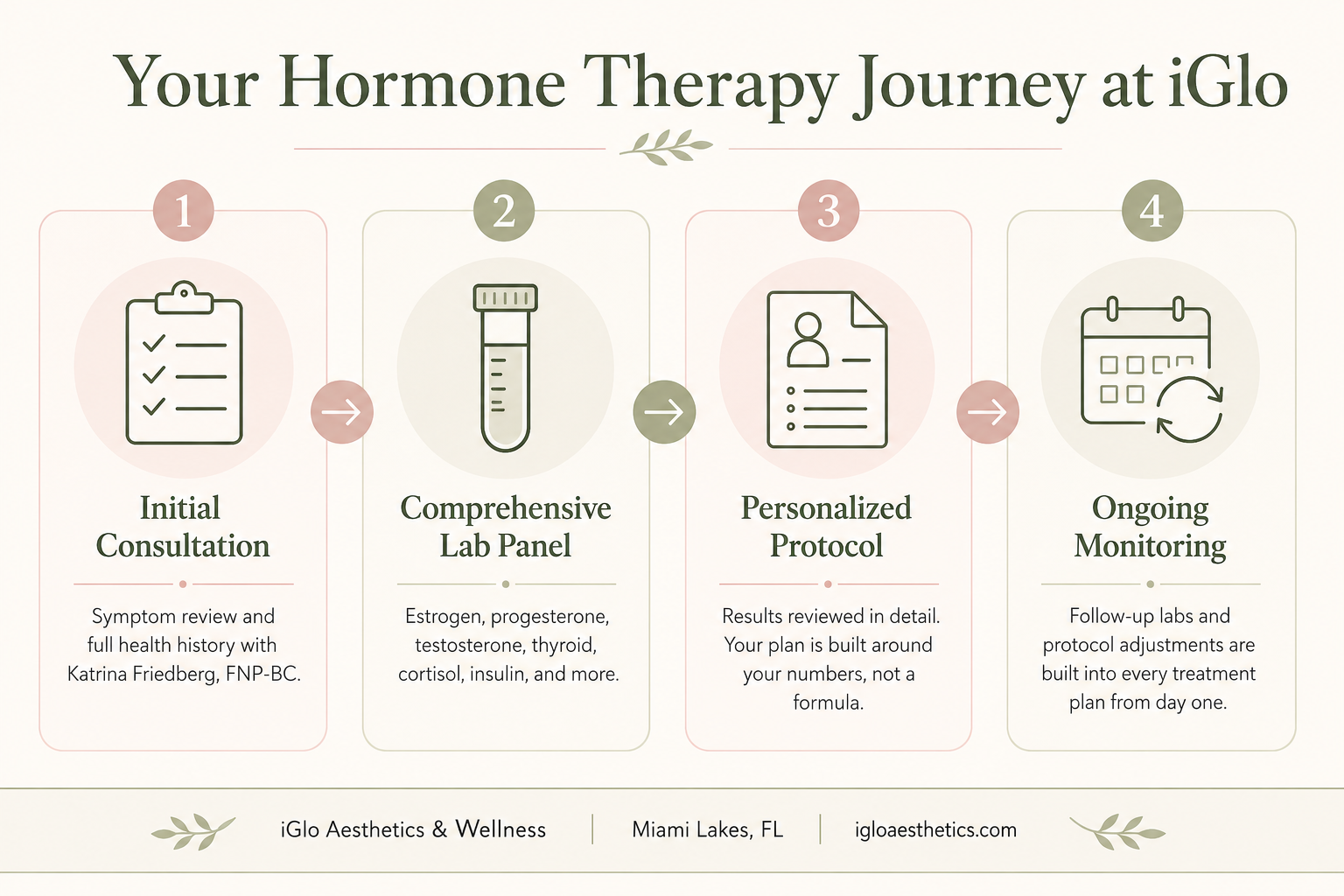
The process begins with a comprehensive consultation and lab order. Results are reviewed in a follow-up appointment where a personalized treatment plan is built based on your actual numbers and symptom picture. Follow-up lab monitoring is built into every protocol from the beginning, not added as an afterthought.
Patients coming to iGlo from Doral, Miramar, Hialeah, and Pembroke Pines choose this practice because the approach is clinical first. There is no protocol applied before the results are in. There is no generic formula handed to every patient of a certain age. What you receive is a plan built around your labs, your symptoms, and your goals, reviewed and adjusted as your body responds. Many patients also explore
IV therapy and wellness protocols at iGlo as a complementary support layer while their hormone protocol takes effect.
Frequently Asked Questions About Hormone Therapy for Women
How Do I Know If I Need Hormone Therapy?
The most reliable way to know is through a comprehensive hormone panel interpreted by a licensed clinician. Common symptoms that prompt testing include persistent fatigue, unexplained weight gain, brain fog, sleep disruption, hot flashes, reduced libido, and mood changes. These symptoms during your 40s and early 50s are frequently hormonal in origin and respond well to targeted treatment. A single conversation and a lab order are often all it takes to get clarity.
What Is the Difference Between Bioidentical and Synthetic Hormones?
Bioidentical hormones are chemically identical in structure to the hormones produced naturally by the body. Synthetic hormones are structurally modified versions that may behave differently at the receptor level and are metabolized differently. Most current research supports a more favorable side effect profile for bioidentical compounds, though all hormone therapy requires clinical supervision and ongoing monitoring regardless of the form used.
Is Hormone Therapy Safe for Women in Their 40s and 50s?
Bioidentical hormone therapy, prescribed and monitored by a licensed clinician, is considered safe for most women in their 40s and 50s who do not have contraindications such as hormone-sensitive cancers or active cardiovascular disease. The risk-benefit assessment is made individually based on personal and family health history. Katrina Friedberg, MSN, APRN, FNP-BC, reviews that history in full before any protocol is recommended.
How Long Before Hormone Therapy Starts Working?
Most patients notice initial improvements in sleep and energy within two to four weeks. Mood and cognitive clarity often improve within four to six weeks. Physical changes, including shifts in body composition and skin texture, develop more gradually, typically over three to six months of consistent treatment. Results are not immediate, but they are measurable and build over time.
Can Hormone Therapy Help With Weight Loss?
Hormone optimization can meaningfully improve the body's response to weight loss interventions by correcting underlying metabolic and hormonal barriers. Estrogen and testosterone both influence fat distribution and metabolic rate. Hormone therapy is not a standalone weight loss treatment, but for many perimenopausal women it removes the physiologic friction that has been making everything else harder.
Katrina Friedberg's Perspective on Hormone Care
"In my experience, hormonal imbalance is one of the most undertreated conditions I see in women over 40, and it is often the missing piece in a weight loss or energy conversation. I don't order a single estrogen number and call it a panel. I look at the full picture: thyroid, cortisol, sex hormones, insulin. When all of those are in the right range for that individual, not just within the lab's normal range, the difference in how my patients feel is remarkable. That is what personalized care actually means."
— Katrina Friedberg, MSN, APRN, FNP-BC
Ready to Get Answers? Here Is How to Take the Next Step.
Hormonal symptoms that go unaddressed for years have cumulative effects on bone density, metabolic health, cognitive function, and skin aging. Early intervention changes the long-term trajectory. The women who wait often find that the longer they wait, the more ground there is to recover.
At iGlo, the hormone consultation starts with a thorough symptom review and a lab panel ordered specifically for you. The follow-up appointment is where Katrina reviews your results, explains what she is seeing, and builds a protocol around your numbers, not a default formula. Every patient in Miami Lakes, Doral, Miramar, Hialeah, and Pembroke Pines gets that same level of attention.
Board-certified. Lab-based. Monitored from day one.
Book your hormone consultation at iGlo today
and find out whether hormonal imbalance is what has been standing between you and feeling like yourself again.
Recent Posts