XERF Skin Tightening in Miami: The Complete Guide to How It Works, Who It's For, and What to Expect
TL;DR
- XERF is an advanced radiofrequency system that delivers controlled RF energy to targeted tissue depths, triggering immediate collagen contraction and sustained dermal remodeling for up to six months after a single session.
- At iGlo Aesthetics & Wellness in Miami Lakes, XERF is used to address mild to moderate skin laxity in the face, jawline, neck, and body for patients who want real structural change without surgery or significant downtime.
- Results develop progressively, with peak improvement typically visible at four to six months post-treatment.
If you've noticed the jawline softening or the neck losing its definition over the past few years, you're not imagining it. Collagen production slows in your 40s, and the tissue that once kept everything lifted begins to lose its hold. For most patients in Miami Lakes, Doral, and the surrounding South Florida area, surgery feels like too much. Downtime is real. Recovery affects work, family, and everything else.
XERF skin tightening in Miami is built for that gap. It delivers radiofrequency energy at specific tissue depths to stimulate the kind of structural collagen change that actually moves the needle on laxity. This guide covers exactly how the technology works, who gets the best results, how it compares to Morpheus8, and what the treatment experience looks like from consultation through peak results.
What Is XERF and How Does It Work?
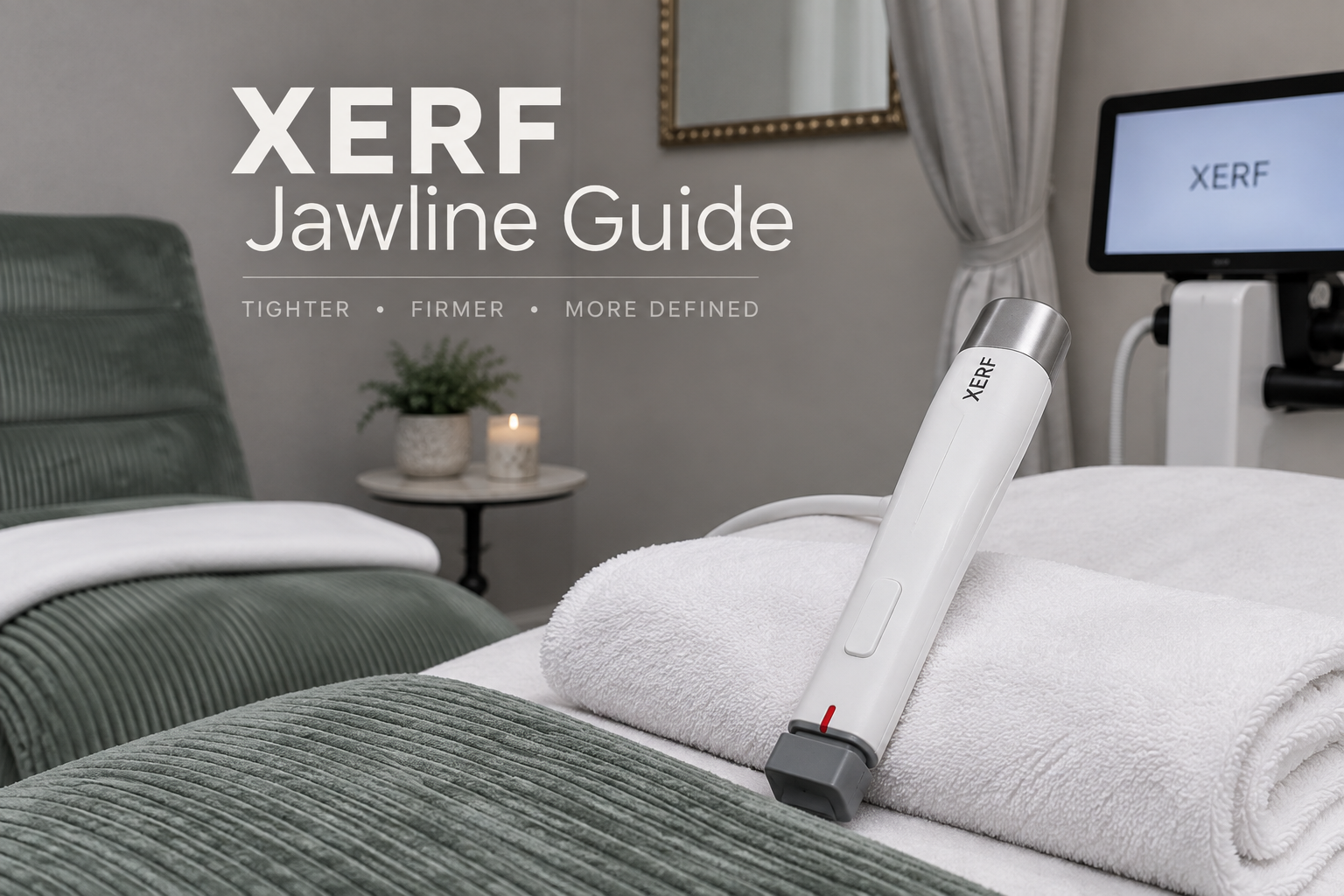
XERF delivers radiofrequency energy to specific tissue depths, generating controlled heat that causes existing collagen fibers to contract immediately while stimulating new collagen production over the following weeks and months. The result is progressive tightening that improves for up to six months after treatment.
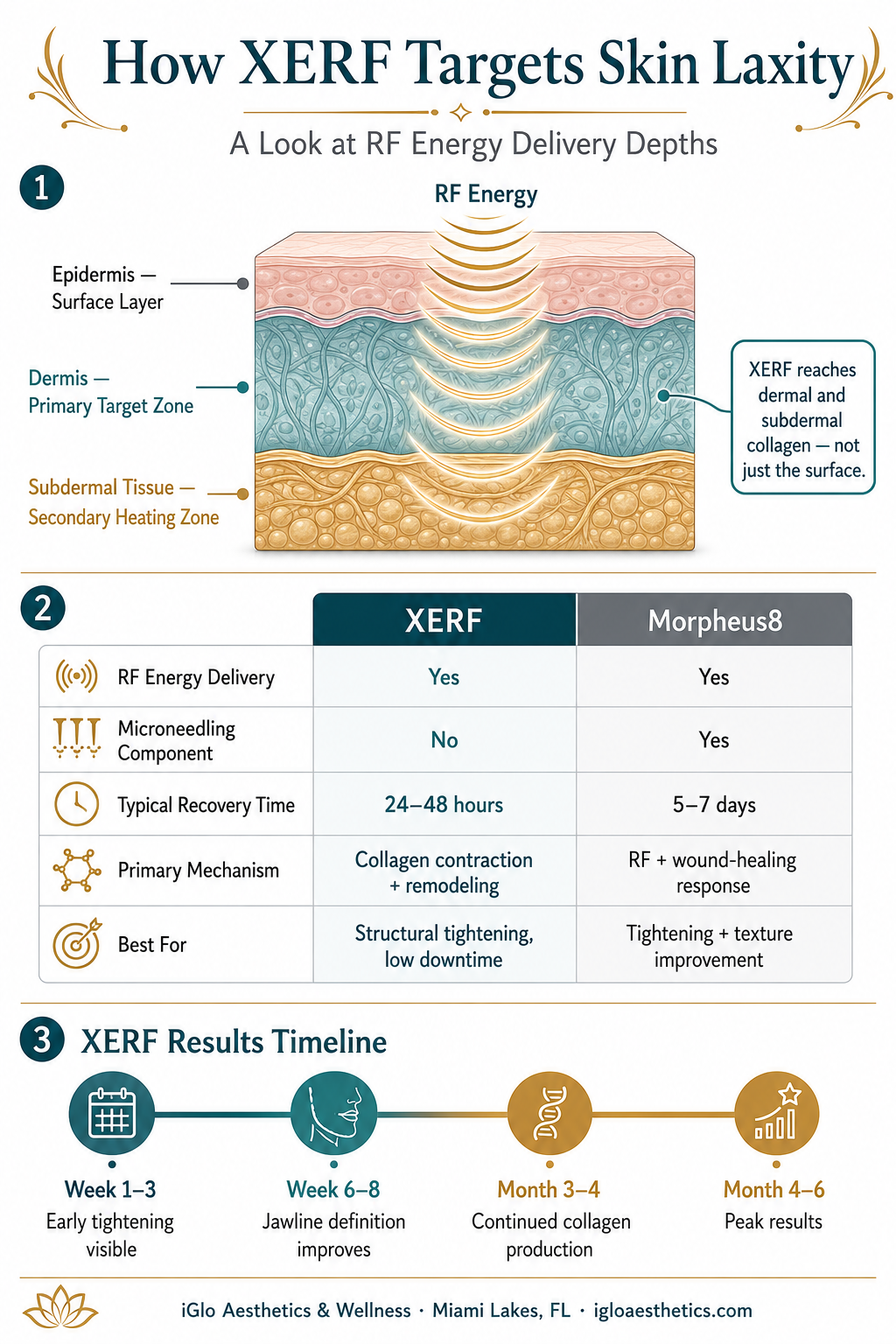
RF energy has been used in aesthetics for years, but not all systems deliver it the same way. XERF is designed to reach the dermal and subdermal layers where structural collagen actually lives. When the tissue in those layers is heated to the right therapeutic temperature, two things happen: the existing collagen fibers contract and tighten, and the body's natural repair response kicks off a longer-term production cycle.
What Makes XERF Different From Earlier RF Systems
Earlier generations of radiofrequency devices concentrated energy closer to the surface. That produced some improvement in skin texture but rarely addressed the deeper tissue where meaningful laxity originates. XERF's energy delivery parameters are calibrated to reach deeper layers with more precision, which is why the tightening effect tends to be structural rather than purely cosmetic.
The system also allows the treating clinician to adjust energy settings based on the patient's tissue characteristics. That kind of calibration matters. A patient with thicker, more resilient tissue requires a different protocol than someone with more delicate subdermal architecture.
How RF Energy Interacts With Skin Tissue
RF energy works by generating heat through electrical resistance in tissue. As the RF waves pass through skin, the resistance in the tissue converts that energy into heat at the target depth. That heat does two things at the cellular level: it causes immediate collagen fiber contraction (which you can think of as a mechanical tightening), and it triggers fibroblast activity, which drives new collagen synthesis over the months that follow.
The timeline of results reflects this dual mechanism. Some tightening is visible within the first few weeks from the immediate contraction response. The slower, deeper improvement comes from the new collagen production, which matures over three to six months.
What Can XERF Treat, and What Are Its Limits?
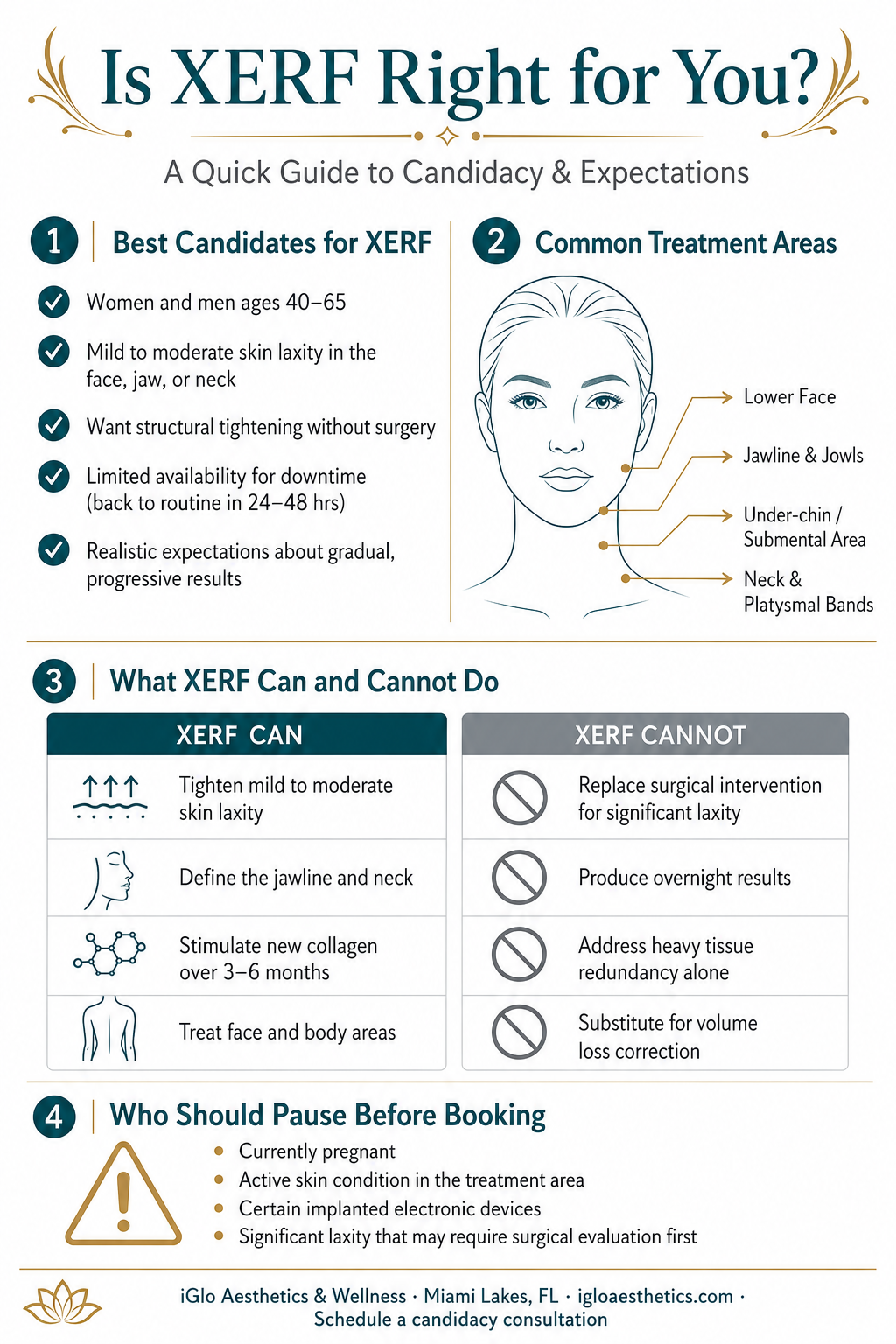
XERF is most effective for mild to moderate skin laxity, particularly jowls, jawline definition, neck tightening, and early lower face sagging. It produces measurable results in patients who are not ready for or interested in surgery, but it is not a replacement for surgical intervention when laxity is significant.
That distinction matters and any honest clinician will make it upfront. XERF works with the body's collagen remodeling process, which has real capability but also real limits. Patients with significant tissue redundancy or deep jowling may see improvement but are unlikely to reach their goals with RF alone.
XERF for the Face and Neck
The jawline and neck are the two areas where XERF consistently produces its most appreciated results. Patients describe a gradual firming along the jawline that becomes noticeable at around six to eight weeks and continues developing through the four to six month mark. The neck, particularly the area under the chin and along the platysmal bands, responds well to the subdermal heating XERF delivers.
The lower face more broadly, including the areas around the jowls and the transition from cheek to jaw, also responds. For patients in their 40s and 50s who have early to moderate laxity in these areas, XERF often delivers results that genuinely move the needle without the recovery commitment of a surgical approach.
XERF for Body Areas
XERF is not limited to the face and neck. Body areas with skin laxity, including the abdomen, inner arms, and inner thighs, can be treated. The same RF principles apply: the energy reaches the subdermal layer, triggers collagen contraction, and initiates a remodeling cycle. Results on the body tend to be subtler than facial results but are still appreciated by patients who want improved skin quality in areas of concern.
How Does XERF Compare to Morpheus8?
Both XERF and Morpheus8 use radiofrequency energy, but their mechanisms differ. Morpheus8 combines microneedling with RF delivery, creating micro-injuries that trigger a wound-healing response alongside the RF heating. XERF delivers RF energy without the microneedling component, which affects both the treatment experience and the recovery profile.
This is one of the most common questions patients bring to consultation. The right answer is genuinely patient-specific, not a blanket recommendation either way.
Which Is Better for Jowls?
Both treatments can improve jowl laxity. Morpheus8's microneedling component can address texture irregularities and early scarring at the same time it tightens, which makes it a strong choice when the patient has multiple concerns in the same treatment area. XERF may be preferred when the primary goal is structural tightening without the additional texture-focused work. For patients who want meaningful jowl improvement with a lower recovery burden, XERF is often the more comfortable path.
Treatment Experience and Downtime Compared
Morpheus8 involves both microneedle penetration and RF delivery, which produces a more intense sensation and typically a longer recovery window. Redness, swelling, and pinpoint marks from the needles are expected for several days to a week after treatment. XERF delivers RF energy without the microneedling step. Most patients experience mild redness and swelling that resolves within 24 to 48 hours. For patients whose lifestyle or work schedule makes a week of visible recovery impractical, that difference is significant.
When a Provider Might Recommend One Over the Other
At iGlo, the recommendation comes down to a thorough assessment. Skin texture concerns, degree of laxity, patient pain tolerance, available recovery time, and the specific anatomical area being treated all factor into which modality fits the patient best. Some patients are good candidates for both and may benefit from a staged approach.
Is XERF Safe, and Is There a Risk of Fat Loss?
Fat loss is a known risk with some RF modalities when energy is delivered too aggressively to subcutaneous fat tissue. XERF's energy delivery parameters are designed to heat the target tissue without causing unintended fat atrophy when used correctly by a trained provider. Proper calibration by an experienced clinician is the primary safety factor.
This is a fair and important question, and patients who ask it are doing their homework. Subcutaneous fat atrophy can occur with RF when the energy settings are not appropriate for the patient's tissue depth and composition. It is not an inherent outcome of RF treatment; it is an outcome of improper application.
What the Research Says on RF and Fat Tissue
The mechanism behind RF-related fat loss is thermal: when RF energy is applied at excessive intensity to the fat layer rather than the dermal and subdermal collagen structures, the fat cells can sustain thermal damage. Properly calibrated RF protocols that target the dermis and subdermal tissue do not produce this effect. The research consistently points to energy settings and delivery technique, not the technology itself, as the determining factors.
How to Evaluate Provider Competency Before Treatment
The single most important question to ask before any RF treatment is about the provider's training and experience with that specific device. Ask how many patients they have treated with XERF specifically. Ask how they calibrate energy settings for different tissue types. A provider who can walk through the clinical reasoning behind their protocol choices is a provider who has done the work. A provider who can't explain it clearly may be relying on default settings without the clinical judgment to adapt them.
What Is the XERF Treatment Experience Like?
Most patients describe XERF as a warm, pressure-like sensation during treatment. Topical numbing is applied beforehand. Mild redness and swelling are expected in the hours following treatment and typically resolve within 24 to 48 hours.
Day of Treatment: What to Expect
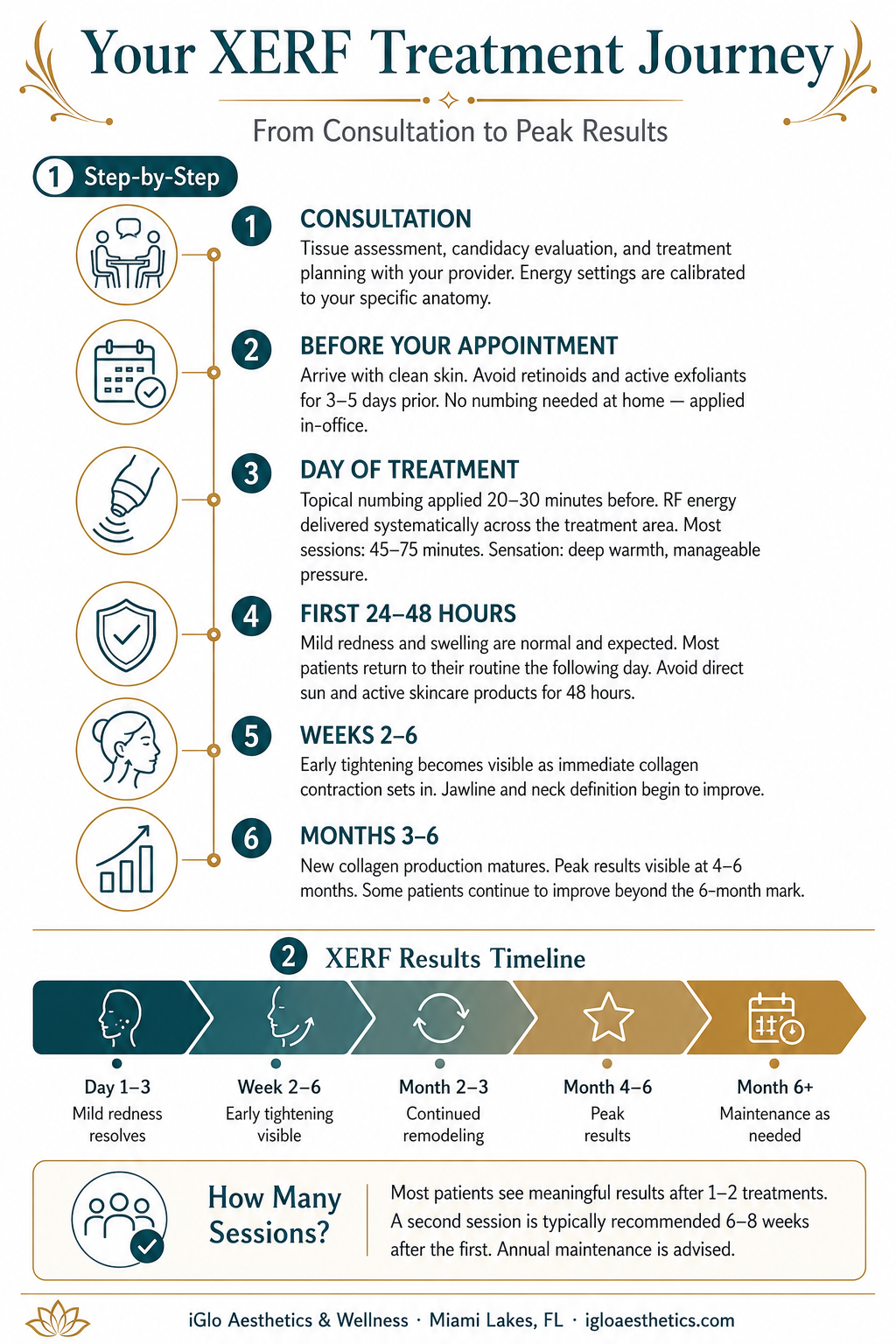
A topical numbing cream is applied before treatment begins, generally 20 to 30 minutes before the provider starts the RF delivery. Once the area is adequately numbed, the handpiece is moved systematically across the treatment area, delivering RF energy at the calibrated settings. Most full-face and neck sessions take 45 to 75 minutes. Patients typically describe the sensation as a deep warmth with occasional pulses of more intense heat. It is manageable for the vast majority of patients.
After the session, mild redness and swelling are normal and expected. Most patients return to their normal routine within 24 to 48 hours. Makeup can generally be applied the following day.
Recovery and the Peak Results Timeline
The first few weeks after XERF bring early tightening from the immediate collagen contraction response. Around weeks six to eight, patients often begin to notice more defined results at the jawline and neck. New collagen production continues through the three to six month window, with peak results typically visible at the four to six month mark. Some patients see continued improvement beyond that point as the remodeling process matures.
Who Is the Best Candidate for XERF at iGlo?
The ideal XERF candidate is a woman or man in their 40s to 60s with mild to moderate skin laxity who wants a non-surgical tightening option. Patients with significant laxity who are surgical candidates may not achieve their desired outcome with XERF alone and should be counseled accordingly.
The patients who get the most out of XERF are those with realistic expectations and early to moderate tissue changes. They're typically active, professionally engaged, and not looking for a week-long recovery. They want a treatment that delivers structural results on a timeline that works with their life. Skin type, tissue composition, and the specific areas of concern all factor into whether XERF is the right primary recommendation or whether it should be combined with another modality.
Patients who are currently pregnant, have certain implanted devices, or have active skin conditions in the treatment area may not be candidates. A thorough in-person assessment is the only way to make that determination accurately.
Frequently Asked Questions About XERF Skin Tightening
Is there a risk of fat loss with XERF?
Fat loss is a potential risk with any RF treatment when energy is applied too aggressively to subcutaneous fat tissue. XERF's protocols are designed to heat dermal and subdermal layers without causing unintended fat atrophy. The risk is minimized significantly when treatment is performed by a trained, experienced clinician who calibrates energy settings to the patient's tissue characteristics. Choosing a qualified provider is the single most important safety factor.
Does XERF hurt more than Morpheus8?
Most patients find XERF more comfortable than Morpheus8 because there is no microneedling involved. Morpheus8's combination of needle penetration and RF delivery creates a more intense sensation for many patients. XERF delivers RF energy without micro-injuries, which generally produces a more tolerable experience overall. Topical numbing is applied before both treatments to reduce discomfort.
What is the XERF peak results timeline?
XERF results develop progressively after treatment. Initial tightening from immediate collagen contraction is visible within the first few weeks. New collagen production continues for three to six months, with peak results typically visible at the four to six month mark. Some patients see continued improvement beyond six months.
How many XERF treatments are needed?
Most patients see meaningful results after one to two treatments. A second session is often recommended six to eight weeks after the first to build on initial collagen remodeling. Maintenance treatments are typically recommended annually, or as needed based on the patient's ongoing skin changes.
Is XERF better than Morpheus8 for jowls?
Both XERF and Morpheus8 can improve jowl laxity, but the better choice depends on the patient's specific anatomy, degree of laxity, and comfort with downtime. Morpheus8's microneedling component can also address texture and scarring simultaneously. XERF may be preferred for patients who want tightening with minimal recovery. A thorough in-person assessment is required to determine which modality fits the patient's goals. You can also read our
XERF vs Morpheus8 comparison for a deeper look at both options.
Katrina Friedberg's Perspective on XERF
"When I'm evaluating a patient for XERF versus another RF option, I'm looking at tissue depth, laxity degree, and what their lifestyle allows for in terms of recovery. XERF is a strong choice for the patient who wants real structural change in the jawline and neck without committing to a week or more of visible recovery. What I always tell patients is that the technology does its best work in the months after the appointment. The result you see at day three is not the result you're buying."
— Katrina Friedberg, MSN, APRN, FNP-BC
Ready to Find Out If XERF Is Right for You?
If you've been researching non-surgical skin tightening and want a provider who will give you a straight answer about what XERF can and cannot do for your specific situation, iGlo Aesthetics & Wellness in Miami Lakes is one of a limited number of South Florida practices currently offering this treatment.
Your consultation includes a hands-on tissue assessment, an honest candidacy evaluation, and a direct comparison with other available modalities at iGlo. If XERF is the right fit, you'll leave with a clear treatment plan. If another approach would serve you better, including combining skin tightening with volume restoration, Katrina will tell you that too.
iGlo serves patients throughout Miami Lakes, Doral, Hialeah, and the greater Miami area. Katrina Friedberg, MSN, APRN, FNP-BC, brings more than 10 years of clinical experience and advanced RF training to every patient assessment.
Recent Posts