Is Halo Laser Better Than a Deep Chemical Peel for Hyperpigmentation?
TL;DR: For most sun-related hyperpigmentation, Halo Laser offers more precise pigment targeting and more predictable, adjustable downtime than a deep chemical peel. That control makes it a strong option for South Florida skin, though the right choice always depends on your skin type and the kind of pigment you're treating.
Comparing Halo laser vs. chemical peel options for hyperpigmentation is one of the most common conversations we have with patients in Miami Lakes. Both treatments can fade sun spots, brown patches, and uneven tone. They get there in very different ways, and that difference shows up in your downtime, your results, and how much control your provider has. Here's how the two compare, and why the answer often looks different under South Florida sun.
How Do Halo Laser vs. Chemical Peel Treatments Compare for Hyperpigmentation?
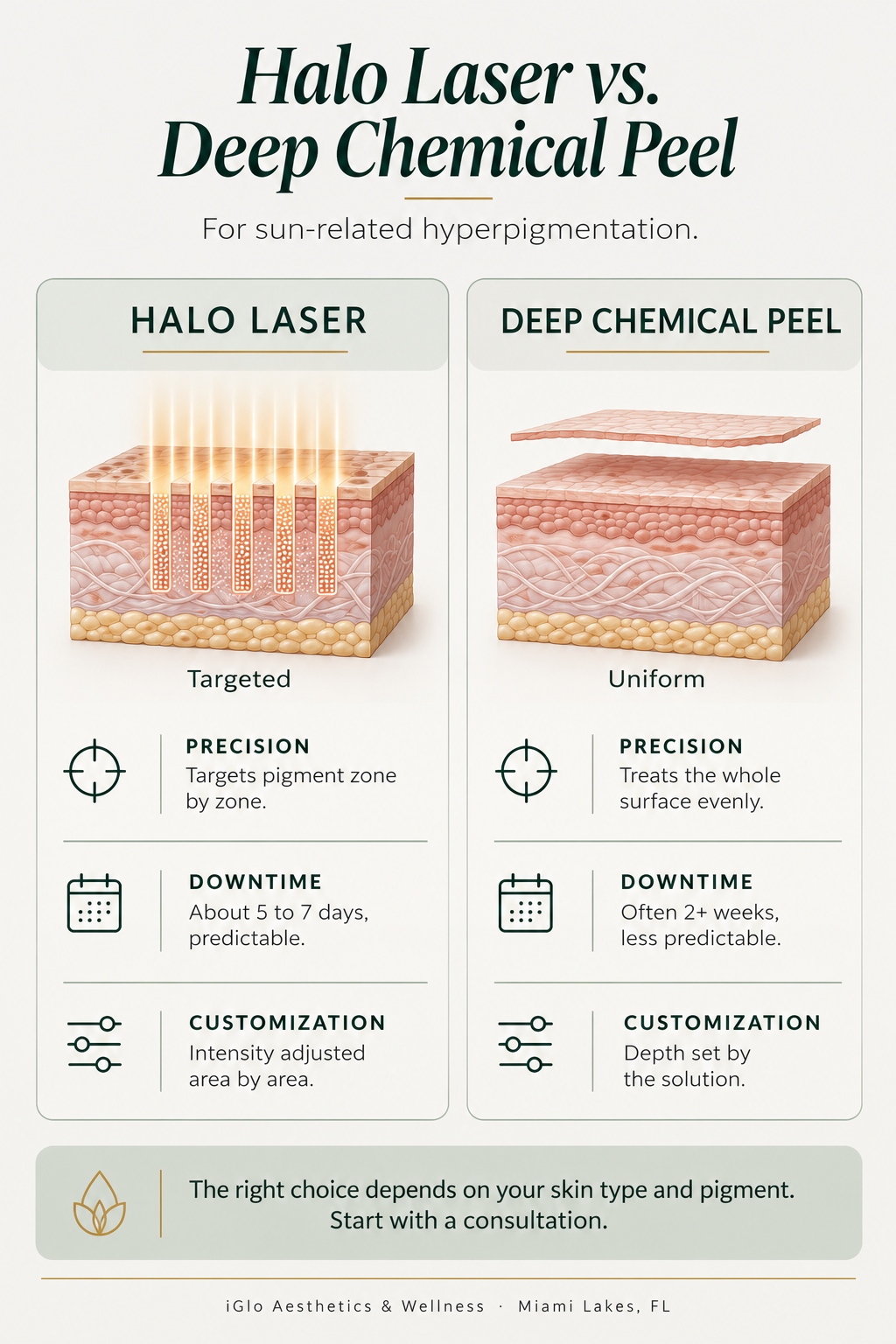
Halo Laser targets pigmented areas with adjustable energy, while a deep chemical peel treats the entire skin surface uniformly with far less room for customization. Almost every other difference between the two traces back to that.
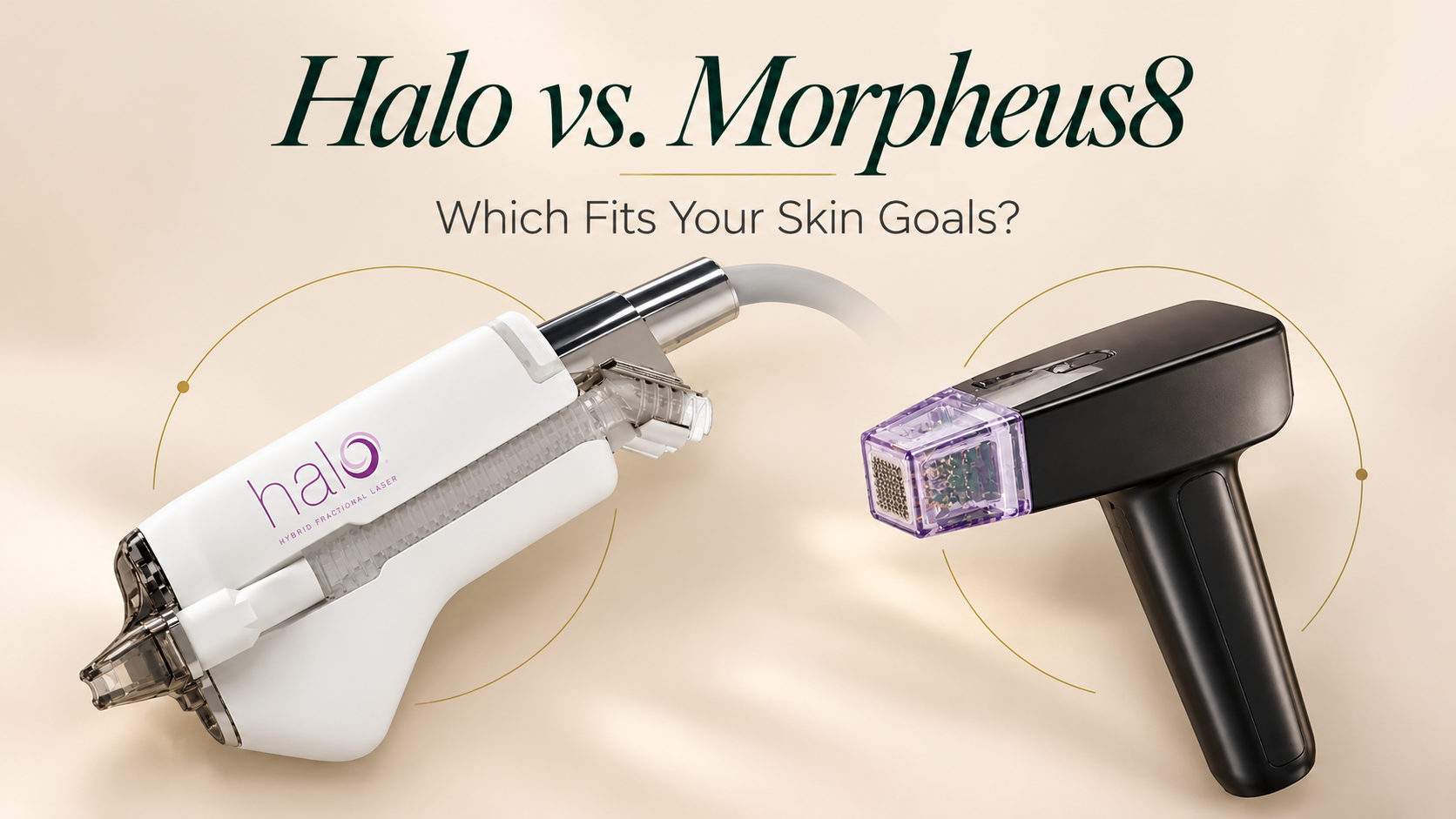
Halo is a hybrid laser from Sciton that uses fractional laser resurfacing. It treats tiny columns of skin and leaves healthy tissue between them, which helps the skin recover faster. Your provider can adjust intensity zone by zone, so sun spots across the cheekbones get more attention than an area with lighter damage.
A deep chemical peel relies on chemical exfoliation depth. The solution removes layers of skin evenly wherever it's applied. That can produce strong resurfacing, but the depth is harder to fine-tune and the healing is longer and less predictable.
If pigment targeting precision matters most to you, Halo Laser treatment gives your provider more ways to tailor each session to your skin.

Why Does This Matter for South Florida Skin?
Year-round sun exposure means hyperpigmentation here tends to be layered and quick to return, so a targeted, controllable approach usually works better than an all-over one. That's where Halo's customization has the advantage.
In Miami Lakes, Doral, and Hialeah, there's no off-season for UV. A deep peel removes a lot of skin at once and then requires weeks of strict sun avoidance while it heals. That's a hard ask when your daily routine happens under a 90-degree sky.
Halo's recovery is shorter and easier to plan around. Most patients have redness and a rough, sandpaper-like texture for about five to seven days. Results typically become visible within one to two weeks and keep improving as collagen responds. "For most of my hyperpigmentation patients here, Halo gives us more control over the outcome than a standard peel," says Katrina Friedberg, MSN, APRN, FNP-BC.
Is Halo Right for Every Type of Hyperpigmentation?
Halo is a strong fit for many people with sun-related pigment, but not for every skin type or every kind of discoloration. A consultation answers that before any treatment begins.
Medium and deeper skin tones, common across South Florida, need carefully selected settings because heat-based treatments can trigger rebound pigment. Melasma also behaves differently from sun damage. It's hormonally driven and can flare with heat, so it often calls for a gentler, slower plan. That's why every patient starts with a personalized treatment plan built around your skin and your timeline. If you're weighing Halo against other resurfacing options, read our full Halo Laser comparison guide.
Quick Questions
Which has more downtime, Halo or a deep chemical peel?
Deep chemical peels usually involve longer, less predictable downtime, often two weeks or more of significant peeling and sensitivity. Halo's downtime is generally more consistent, typically five to seven days of redness and rough texture. Your provider can also adjust it based on treatment intensity and your schedule.
Can I combine Halo with a chemical peel?
These treatments typically aren't performed in the same session. Your provider may sequence them over time as part of a broader skin plan. For example, a lighter peel between Halo sessions can sometimes help maintain results. The timing depends on how your skin heals, so it gets mapped out during your consultation.
Book Your Skin Consultation in Miami Lakes
The best next step is a one-on-one consultation where we look closely at your pigment and recommend the approach that fits. As a Sciton-certified provider, iGlo builds every Halo plan around your skin type, your schedule, and your goals. We see patients from Miami Lakes, Doral, Hialeah, Miramar, Pembroke Pines, and greater Miami.