Halo Laser in Miami Lakes: What Real Patients Experience Before, During, and After Treatment
TL;DR
- Halo laser in Miami Lakes delivers visible improvement in skin texture, tone, and sun damage with five to seven days of social downtime.
- At iGlo Aesthetics & Wellness, treatments are performed by Katrina Friedberg, MSN, APRN, FNP-BC, using the Sciton Halo platform calibrated to South Florida skin types and sun exposure history.
- Most patients achieve their primary goal in one to two sessions, with results continuing to improve over 90 days.

If you've spent years in the South Florida sun, doing everything right with SPF, staying out of peak hours, wearing a hat, and your skin still shows the damage, you're not alone. Hyperpigmentation, enlarged pores, uneven tone, and fine lines accumulate quietly over time, and most topical treatments can only do so much from the outside.
Halo laser treatment in Miami Lakes has become one of the most requested services at iGlo Aesthetics & Wellness, and the reasons why come through clearly in what patients actually say after they go through it. This article covers what the treatment involves, what downtime genuinely looks like day by day, which skin concerns it addresses most effectively, and how to evaluate whether a provider is actually qualified to perform it on your skin type.
What Do Miami Lakes Patients Say About Halo Laser?
Patients at iGlo consistently report that their results exceeded what they expected going in. The feedback that comes up most often centers on three things: the improvement in sun damage was more significant than anticipated, the bronzing phase was shorter than they feared, and the overall downtime was manageable with some advance planning.
What Patients Wish They'd Known Beforehand
The most common thing first-time Halo patients say they wish they'd known: build in a full week. Not because the process is painful or debilitating, but because the skin goes through a visible recovery cycle that requires some social flexibility. Patients who clear their calendar for days three through six feel far more relaxed about the process than those who tried to squeeze treatment between events.
A few other things patients frequently mention:
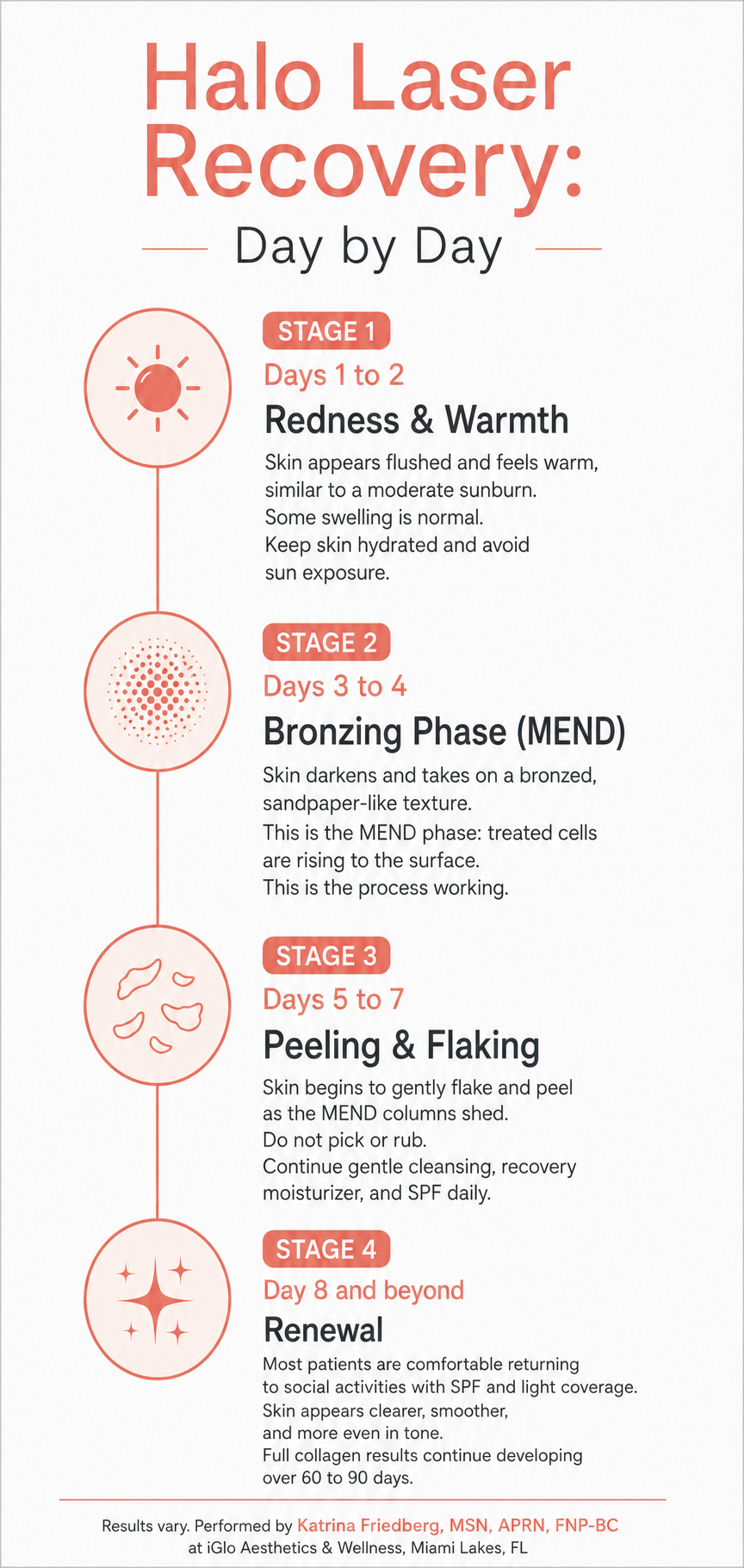
The bronzing stage looks more alarming than it feels. Around day three, the skin takes on a darker, leathery texture as the treated cells rise to the surface. This is the process working. Patients who understood what was happening before they saw it in the mirror moved through this phase with confidence rather than concern.
Prep matters. Patients who followed the pre-treatment skincare protocol, particularly sun avoidance and any prescribed topicals in the weeks prior, tended to have smoother recoveries and stronger results.
When Results Become Visible
Initial results, including clearer tone, tighter pores, and a more even surface, begin to show around day seven to ten, once the peeling phase completes. The more significant changes, particularly in collagen density and deeper texture refinement, develop over 60 to 90 days as the remodeling process continues underneath the surface. Patients who understand this timeline tend to be far more satisfied than those who expect the full outcome at the two-week mark.
What Skin Concerns Does Halo Laser Actually Fix?
Halo is most effective for fine lines, sun damage, hyperpigmentation, enlarged pores, and early skin laxity. It is a strong match for South Florida patients specifically, because the dual-wavelength approach addresses both the surface damage visible now and the deeper structural changes that accumulate from years of UV exposure.
Halo for Brown Spots and Melasma
For sun-induced brown spots and general pigmentation irregularity, Halo is one of the most effective clinical options available. The non-ablative wavelength targets melanin in the upper dermis, while the ablative channel accelerates cell turnover to clear the damaged cells to the surface. Most patients see meaningful improvement in pigmentation after a single treatment, with continued clearing over the following 90 days.
Melasma requires a more careful approach. The condition is triggered by heat and hormonal factors in addition to UV, which means laser energy must be calibrated conservatively to avoid a rebound response. A thorough consultation, combined with a melanin-suppressing skincare protocol in the weeks before treatment, is necessary before proceeding with Halo for melasma.
Halo for Texture and Pore Refinement
Pore size and skin texture respond well to Halo because the treatment stimulates new collagen production in the dermis, which gradually tightens and smooths the skin architecture from beneath the surface. Patients with rough texture from years of sun exposure, or those dealing with mild acne scarring in addition to pigmentation concerns, frequently see improvement across both issues in a single treatment cycle.

What Does Halo Laser Downtime Actually Look Like Day by Day?
Days one and two involve redness and warmth, similar to a moderate sunburn. By days three and four, the skin develops the characteristic bronzing: a darker, sandpaper-like texture as the treated cells rise. Days five through seven bring peeling and flaking. By day eight, most patients are comfortable returning to social activities with SPF and light coverage.
The MEND Phase Explained
MEND stands for Microscopic Epidermal Necrotic Debris, the column of treated skin cells that rises to the surface and eventually flakes off. This is not damage. It is the mechanism of the treatment. The Sciton Halo system creates thousands of tiny treatment zones in the skin, each of which cycles through this process at a microscopic level. The visible bronzing and flaking on the surface is what that process looks like from the outside.
Understanding this before treatment is what separates patients who feel reassured by the process from those who feel alarmed by it.
What to Avoid During Recovery
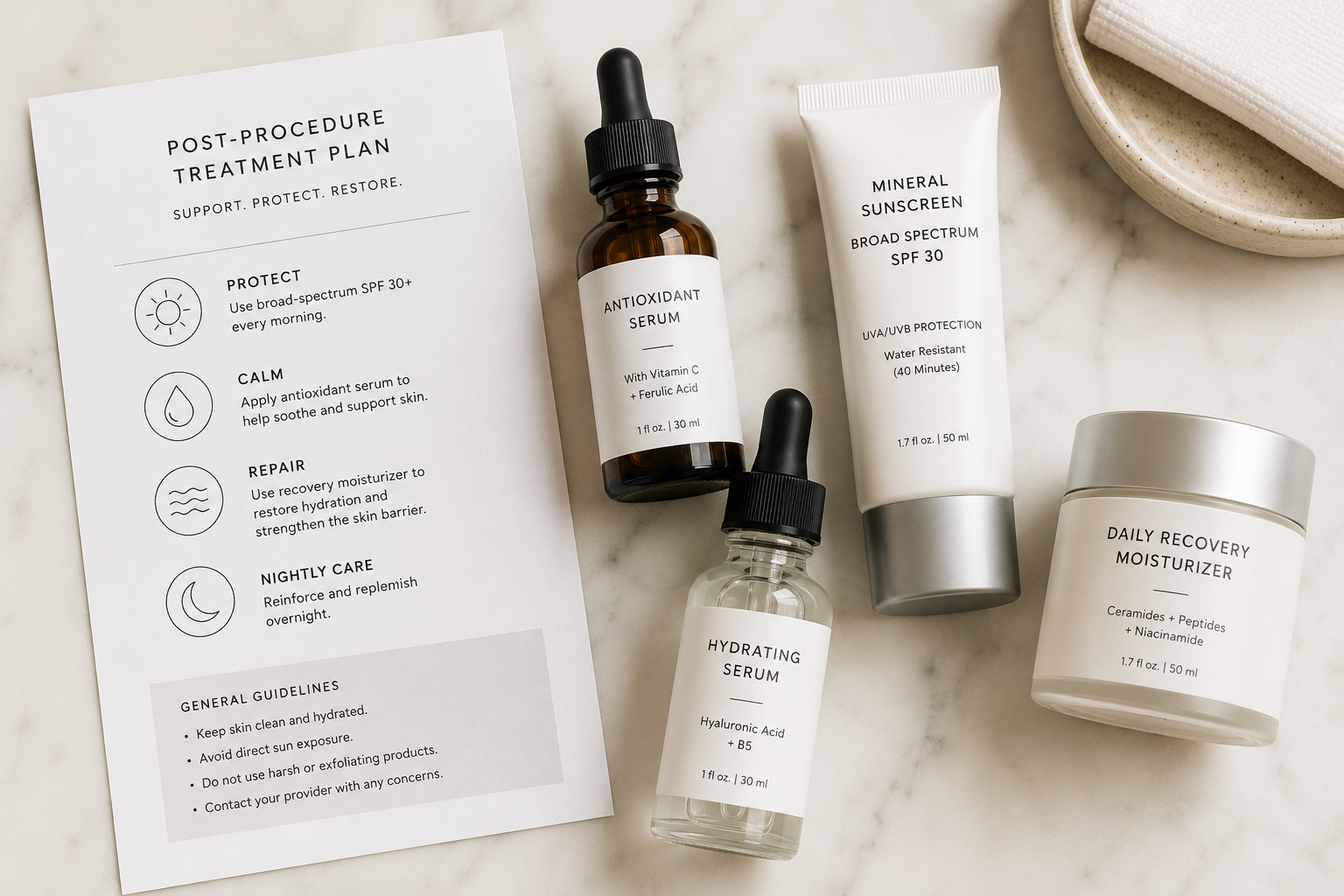
For the first seven days: no direct sun exposure, no heavy exercise that causes significant sweating, no exfoliating products, no retinoids, and no picking or rubbing the skin. Gentle cleansing, a prescribed recovery moisturizer, and consistent broad-spectrum SPF are the foundation of the post-treatment protocol. Patients in Miami Lakes and throughout South Florida need to be especially disciplined about sun protection during recovery given the UV intensity of the region.
How Is Halo Different From Other Lasers Available in Miami?
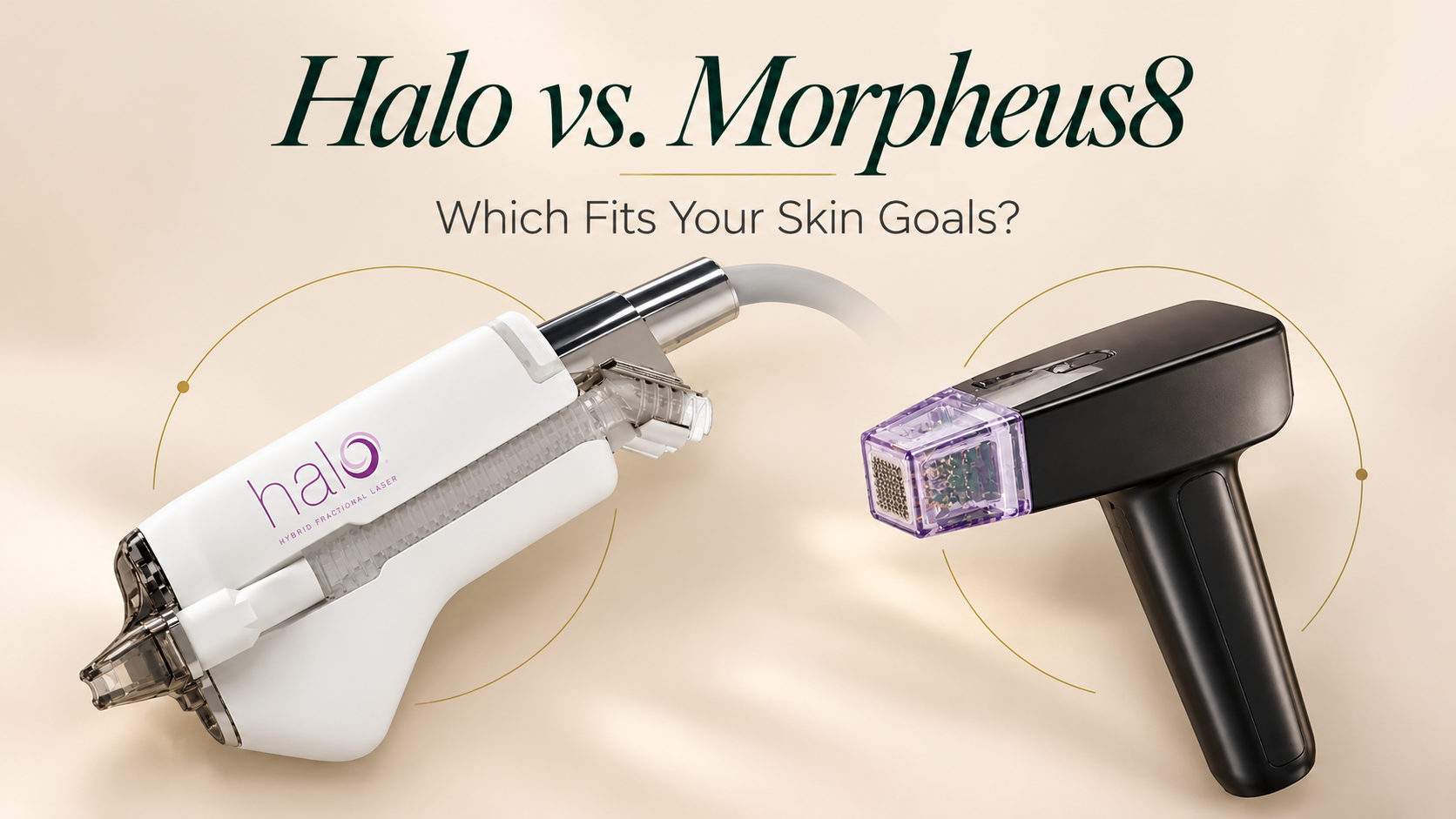
Halo is the only hybrid fractional laser on the market. It delivers both ablative and non-ablative wavelengths simultaneously in a single pass, targeting both the skin's surface and the deeper dermal layers at once. That combination produces more comprehensive results than either wavelength alone, with less total downtime than a fully ablative treatment would require.
Halo vs. CO2 Laser
A fully ablative CO2 laser removes the entire surface layer of treated skin, which produces dramatic results but requires two to three weeks of significant downtime and carries a higher risk profile. Halo's fractional approach treats columns of tissue while leaving surrounding skin intact, preserving the healing reservoir that accelerates recovery. For patients who want meaningful results without two to three weeks of social downtime, Halo is the more practical option for most.
Halo vs. Sciton BBL: When to Choose Which
BBL (BroadBand Light) targets superficial pigmentation and vascular concerns with light energy, with minimal downtime and no peeling. It is excellent for maintenance and for patients with early sun damage or redness. Halo goes deeper, addressing texture, collagen, and more significant pigmentation in a single session. Many patients at iGlo receive both: a BBL series for ongoing maintenance and a Halo treatment for a periodic deeper reset. Your personalized treatment plan will reflect which approach fits your current skin condition and goals.
How Many Halo Treatments Do You Need and How Long Do Results Last?
Most patients achieve their primary goal in one to two Halo sessions. A single treatment produces visible improvement in texture, tone, and pigmentation. A second session, if recommended, deepens those results and addresses concerns that didn't fully resolve in the first pass.
Maintenance Protocols for South Florida Skin
Annual maintenance treatments are recommended to preserve results and address new environmental damage, particularly in South Florida where UV exposure continues year-round regardless of season. Patients who treat before peak summer UV exposure tend to allow their skin to complete the full 90-day remodeling cycle before the most intense sun exposure begins.
How to Extend Your Halo Results
A medical-grade SPF used daily is the single most impactful thing a patient can do to protect and extend their Halo results. Avoiding tanning, wearing sun-protective clothing, and maintaining a prescribed skincare routine between treatments all contribute meaningfully. Results are not permanent in the sense that the skin continues to age and accumulate environmental damage, but patients who take care of their skin between treatments see their gains hold significantly longer.
How to Choose a Halo Laser Provider in Miami Lakes
The Sciton Halo platform requires trained hands for proper calibration. The same device with undertrained settings will produce either underwhelming results or unnecessary complications. When evaluating a provider, look for someone who performs Halo regularly, can walk you through their settings rationale for your specific skin type, holds documented clinical training with the Sciton platform, and has the credentials to manage any complications that arise.
A thorough consultation is non-negotiable. Any provider who recommends a treatment setting before assessing your skin type, tone, sun exposure history, and any active concerns like melasma is not approaching this correctly. Halo calibrated for one patient's skin is not automatically right for another's.
Frequently Asked Questions About Halo Laser
Is Halo laser worth it for brown spots and sun damage?
Halo is one of the most effective clinical options for sun-induced pigmentation and brown spots. The non-ablative wavelength targets melanin in the upper dermis while the ablative channel accelerates cell turnover and surface clearing. Most patients see significant improvement in tone and pigmentation after a single treatment, with continued refinement over 90 days as collagen remodeling completes.
How much downtime does Halo laser require?
Most patients plan for five to seven days of social downtime. The first two days involve redness and warmth. Days three through five bring the characteristic bronzing and early peeling. By day seven to eight, most patients are comfortable in public with SPF and light coverage.
Why is my face still red four days after Halo laser?
Redness at day four is a normal part of the Halo recovery process. The skin is actively moving through the MEND phase: treated cells are rising to the surface and beginning to flake off. Persistent, worsening redness accompanied by swelling or increased warmth beyond day five is worth a call to your provider, as it can occasionally indicate a prolonged inflammatory response that warrants attention.
How long do Halo laser results last?
Initial results, including improved texture, tone, and clarity, are visible within seven to ten days and continue improving for up to 90 days as collagen remodeling completes. In South Florida's UV environment, annual maintenance treatments help preserve results and address new environmental damage as it accumulates.
Can Halo laser treat melasma?
Halo can improve the appearance of melasma, but it requires precise calibration by an experienced provider. Aggressive settings can temporarily worsen melasma rather than improve it. A thorough consultation, proper pre-treatment preparation, and a melanin-suppressing skincare protocol are all necessary before proceeding. This is one area where provider experience directly affects outcomes.
Katrina Friedberg's Perspective
"I always tell my Halo patients that the bronzing phase is when the magic is actually happening, even though it doesn't look that way. What you're seeing on days three through five is your body doing exactly what we asked it to do: cycling out the damaged cells and beginning the collagen remodeling process underneath. I recommend building in a full week of social flexibility, not because you'll be in pain, but because the process deserves that space. The results at day thirty are worth every day of it."
— Katrina Friedberg, MSN, APRN, FNP-BC

Ready to See What Halo Can Do for Your Skin?
Halo laser results are cumulative, and timing matters. Patients who treat in the spring, before peak South Florida summer UV exposure, allow the full 90-day collagen remodeling cycle to complete while protecting their investment from immediate sun damage. That timing strategy is something Katrina Friedberg discusses with every new patient at iGlo.
At iGlo Aesthetics & Wellness, every Halo laser treatment in Miami Lakes begins with a dedicated consultation: a skin assessment, treatment planning based on your specific concerns and skin type, and a realistic walk-through of what your downtime and recovery will look like.
Katrina brings 10+ years of clinical experience, Sciton platform training, and a treatment philosophy built around your skin, your timeline. iGlo serves patients from Miami Lakes, Doral, Hialeah, Hialeah Gardens, Miramar, Pembroke Pines, and Miami.
If you want to explore the full skin resurfacing treatment menu before your consultation, that resource walks through how Halo compares to every other resurfacing option offered at iGlo. And if the recovery timeline is your biggest question, the complete Halo recovery guide covers each day in more detail than we've included here.
When you're ready to move forward, Katrina and the iGlo team are here.