How Can a Hormone Specialist Help with Perimenopause Symptoms?
TL;DR
- Perimenopause hormone therapy starts with a comprehensive lab panel that identifies your specific hormone imbalances, not a guess based on age or symptoms alone.
- From there, a personalized treatment plan (which may include bioidentical hormones) is built around your results to address weight gain, sleep disruption, mood changes, and other perimenopause symptoms.
- Women in Miami Lakes, Pembroke Pines, and Miramar can start this process with a one-on-one consultation at iGlo Aesthetics.

Somewhere between your mid-thirties and late forties, your body starts sending signals that don't match anything you've experienced before. Sleep gets lighter. The scale creeps up despite no change in diet. Your mood shifts in ways that feel unfamiliar, even to you. For many women in Pembroke Pines and Miami Lakes, these are the first quiet signs of perimenopause, and finding a hormone specialist who investigates the cause rather than treating each symptom separately makes the difference between years of frustration and a plan that actually works. At iGlo Aesthetics, that investigation starts with lab work, not assumptions. This article walks through the early signs, why weight gain happens even when you're doing everything "right," how a hormone imbalance gets diagnosed, and what treatment actually looks like once you have real answers.
What Are the Early Signs of Perimenopause?
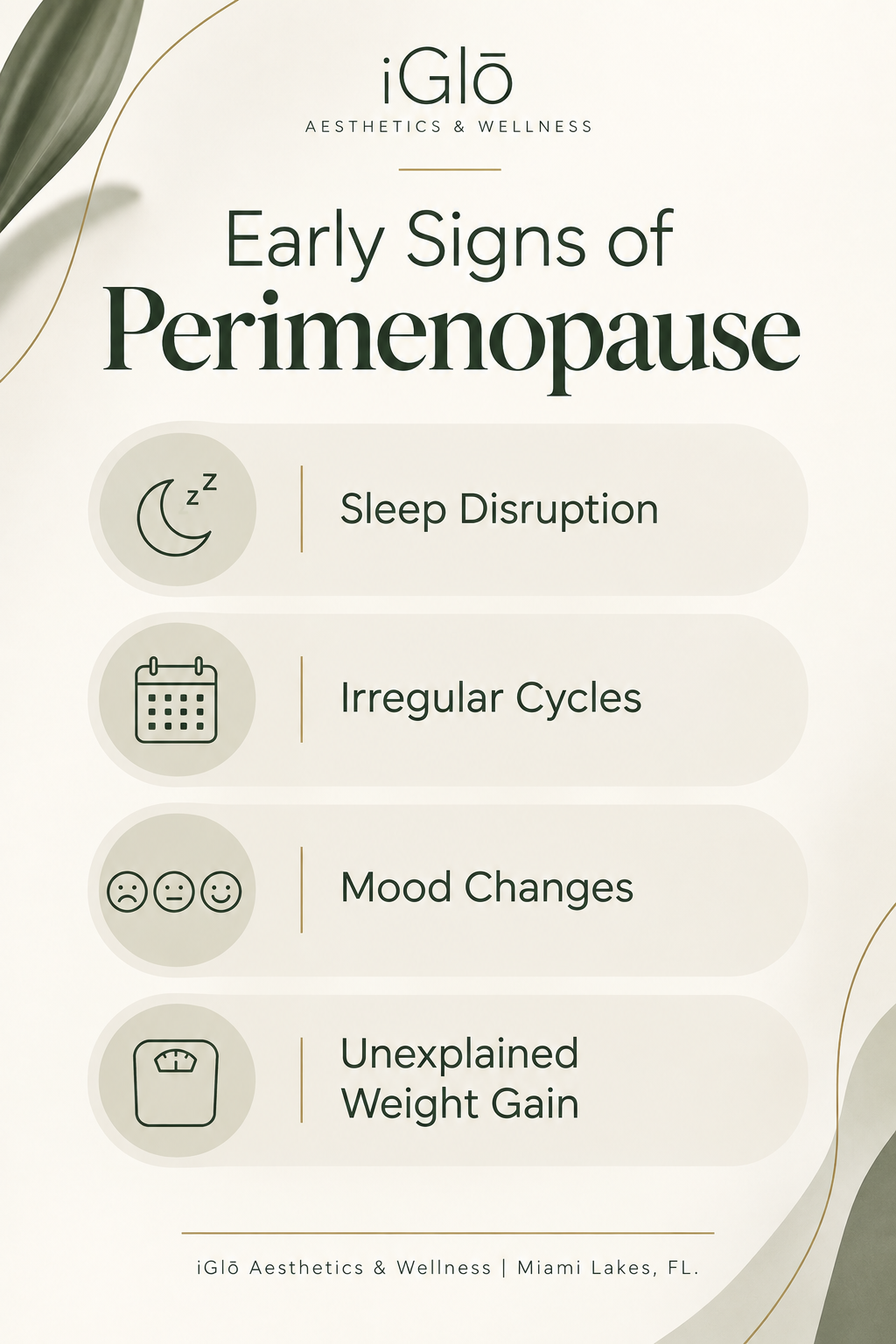
Irregular periods, sleep disruption, mood changes, and unexplained weight gain are among the earliest and most commonly overlooked signs of perimenopause. These changes can start years before a period actually becomes irregular, which is why so many women dismiss what they're feeling as stress, aging, or simply "having an off year."
Other early indicators include night sweats that show up out of nowhere, a shorter fuse than usual, brain fog that makes routine tasks feel harder, and a noticeable drop in energy by early afternoon. Some women also notice changes in their skin, hair thinning, or a lower tolerance for foods and habits that never used to bother them.
Why Symptoms Are Often Dismissed
Part of the problem is timing. Perimenopause symptoms often start in the late thirties or early forties, an age where most women assume hormone changes are still a decade away. Providers without a specific interest in hormone health may also attribute individual symptoms to separate causes: the fatigue gets blamed on being busy, the weight gain on diet, the mood shifts on stress. Looking at symptoms individually instead of as a pattern is exactly why so many women go years without a real answer.
A hormone specialist looks at the full picture instead. Tracking when symptoms started, how they've progressed, and what they have in common gives a far clearer starting point than treating each one on its own.
Why Does Perimenopause Cause Weight Gain Even with a Calorie Deficit?
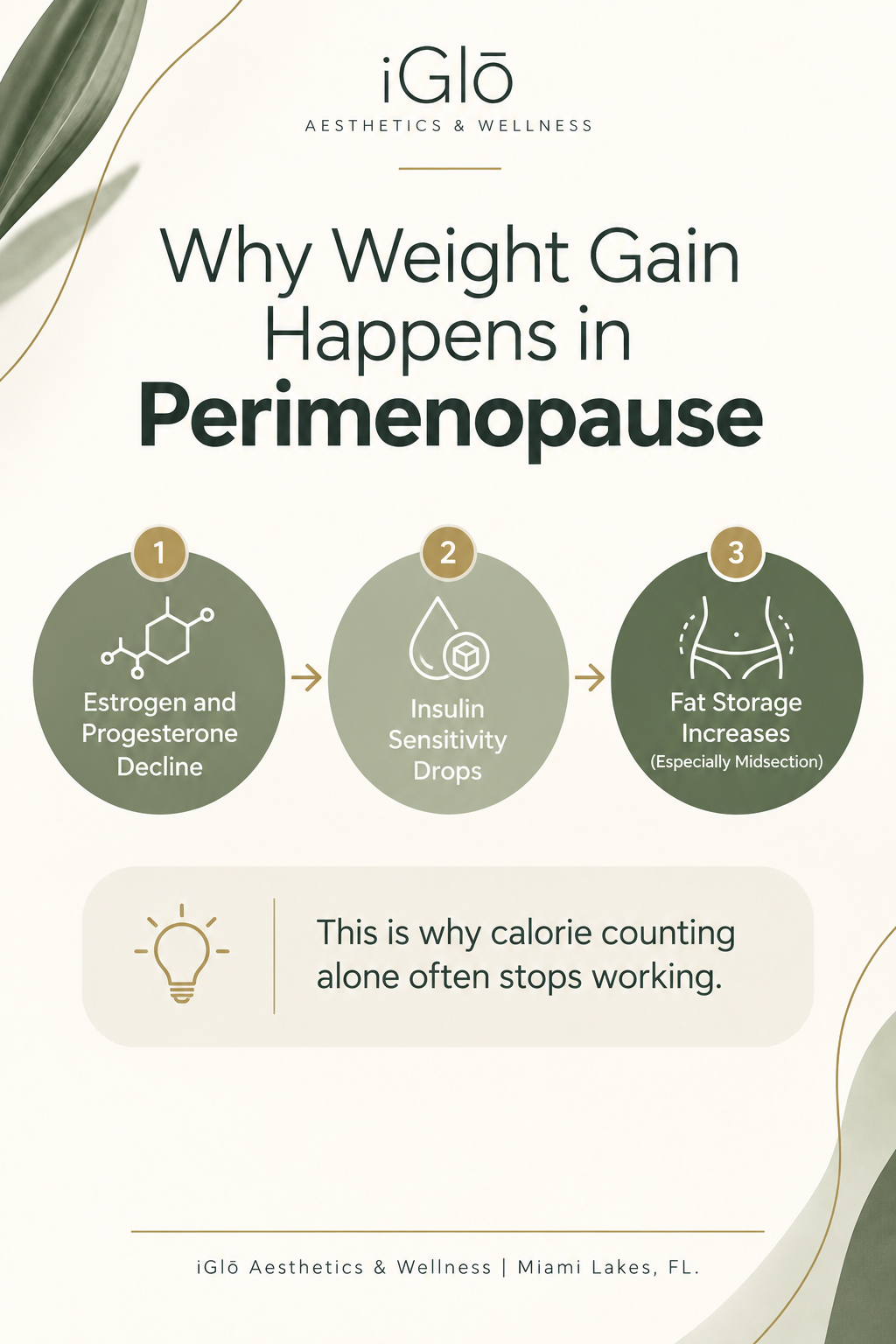
Fluctuating estrogen and progesterone levels affect insulin sensitivity and fat storage patterns, which is why traditional calorie counting often stops working during this transition. As estrogen declines, the body tends to store more fat around the midsection specifically, even in women who haven't changed their eating habits at all.
Progesterone fluctuation adds another layer. Lower progesterone is linked to more water retention and disrupted sleep, and poor sleep on its own raises cortisol, a hormone that makes fat storage even more stubborn. The result is a frustrating cycle: less sleep, more stress hormone, more fat storage, and a metabolism that responds differently to the same diet and exercise routine that used to work.
This is one of the most common reasons women in Miami Lakes come in feeling like they've lost control of their own body. If you want to go deeper on this specific pattern, understand the hormonal link to perimenopause weight gain and what it actually takes to reverse it.
The good news is that once the hormone imbalance driving the weight gain is identified, addressing it directly tends to work far better than another round of calorie restriction.

How Does a Hormone Specialist Diagnose a Hormone Imbalance?
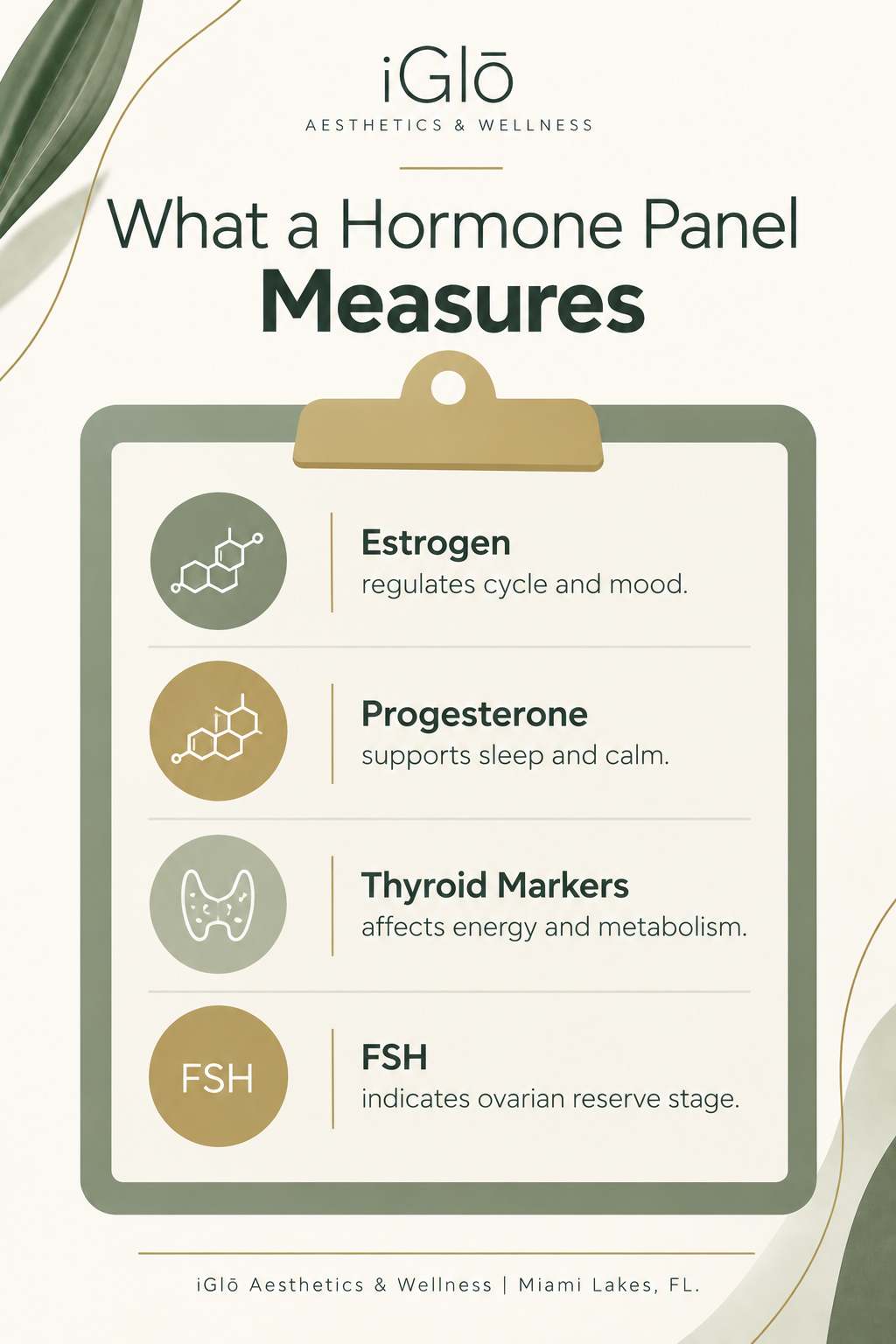
A comprehensive hormone panel measures estrogen, progesterone, and other key markers to build an accurate picture of what's happening in your body. Rather than starting treatment based on age or a checklist of symptoms, a proper diagnosis starts with bloodwork that shows exactly where your levels stand.
At iGlo Aesthetics, this process starts with a detailed symptom history. When did things change? What's gotten worse? What hasn't budged no matter what you've tried? That history, paired with lab results, gives a far more accurate picture than symptoms alone.
The panel typically looks at estrogen, progesterone, and additional markers that can point to thyroid involvement or other contributing factors, since hormone symptoms can overlap significantly. Results are then reviewed with you directly, in plain language, so you understand what your numbers actually mean instead of walking away with a printout and no explanation.
This is also where a hormone specialist earns the title. Interpreting a panel correctly, especially during perimenopause when levels fluctuate week to week rather than sitting still, takes real clinical experience. A single snapshot can be misleading if it isn't read in context with your symptoms and history.
What Treatment Options Does a Perimenopause Hormone Specialist Offer?
Treatment may include bioidentical hormone pellets, topical or oral therapies, and lifestyle adjustments tailored to your specific hormone panel results. There isn't a single protocol that fits every patient, which is the entire point of testing before treating.
For many women, a personalized treatment plan starts with addressing the hormones showing the biggest imbalance first, then adjusting from there based on how you respond. Some patients do well with pellet therapy, which delivers a steady dose over several months. Others prefer topical or oral options that allow for more frequent adjustment. The right fit depends on your lab results, your symptoms, and your comfort level, which is exactly what gets discussed during your consultation.
How Bioidentical Hormones Differ from Synthetic Options
Bioidentical hormones are structurally identical to the hormones your body already produces, which is different from older synthetic formulations that mimic hormone function without matching the body's own chemistry. This structural match is part of why bioidentical options tend to be well tolerated when monitored properly through regular lab work and follow-up visits.
Women exploring these options at iGlo Aesthetics work directly through the hormone therapy program, which combines lab-based diagnosis with ongoing adjustments as your levels change. Perimenopause isn't a fixed state. Your treatment plan should be able to move with it.
What Should You Expect from a Consultation with a Hormone Specialist in Pembroke Pines?
Your first visit includes a full symptom history, lab work, and a collaborative discussion about which treatment path fits your goals and comfort level. Nothing gets prescribed before your results come back and get reviewed with you in detail.
Patients coming from Pembroke Pines, Miramar, and surrounding areas typically start with an initial consultation to talk through what's been happening, followed by bloodwork to confirm what's actually going on hormonally. Once results are in, a follow-up conversation covers your options, what to expect from each one, and a realistic timeline for feeling different.
This isn't a rushed visit. Perimenopause affects every woman differently, and a plan that ignores your specific numbers and history rarely holds up. Expect questions about your sleep, your stress levels, your cycle history, and any symptoms you may not have connected to hormones at all, since patterns often show up in conversation before they show up on paper.
Frequently Asked Questions About Perimenopause Hormone Therapy
At what age does perimenopause typically start?
Perimenopause often begins in the mid-to-late thirties or forties, though timing varies significantly from person to person. Symptoms can appear years before periods become irregular, which is why many women are surprised by an early diagnosis.
Can hormone therapy help with perimenopause-related weight gain?
"I see this question constantly," says Katrina Friedberg, MSN, APRN, FNP-BC. "Hormone therapy can help address the shifts driving the weight gain, but it works best paired with nutrition and activity changes suited to your changing metabolism, not the routine that worked in your twenties."
How long does it take to feel results from hormone therapy?
Many patients notice improvements in sleep, mood, and energy within a few weeks, while full symptom stabilization typically develops over two to three months as hormone levels balance.
Is bioidentical hormone therapy safe?
"In my experience, bioidentical hormone therapy is well tolerated for most patients when it's monitored closely," says Katrina Friedberg. "Regular lab testing and follow-up visits let us adjust dosing as your body responds, instead of setting a plan and walking away from it."
Katrina Friedberg's Perspective
"So many women come in thinking something is wrong with their willpower when really it's their hormones. Once we run a full panel and actually see what's happening, it changes the entire conversation. That's usually the moment things start to click into place, and patients finally have an answer instead of a guess."
— Katrina Friedberg, MSN, APRN, FNP-BC

Ready to Get Real Answers About Your Hormones?
Living with perimenopause symptoms for months or years without a clear explanation is exhausting, and waiting rarely makes things easier. Left unaddressed, symptoms like sleep disruption, mood changes, and weight gain tend to intensify rather than resolve on their own.
At iGlo Aesthetics, board-certified nurse practitioner Katrina Friedberg has spent more than a decade helping women move past the guesswork stage. Every treatment plan starts with lab work, not assumptions, and every consultation is a conversation, not a sales pitch. Patients throughout Miami Lakes, Pembroke Pines, Miramar, Doral, and Hialeah work directly with the same team from the first visit through ongoing care.
If you're ready to find out what's actually going on with your hormones, schedule your consultation today. Your skin, your timeline, and your health deserve a plan built around your own results.
Perimenopause doesn't have to mean years of guessing. With the right hormone specialist and a plan built from real lab data, women across Pembroke Pines and Miami Lakes are finding their way back to feeling like themselves again. iGlo Aesthetics is here to help you get there with answers, not assumptions.